Leave Your Message

10 Best Unmanned Aircraft for Global Buyers?

Choosing among the 10 best Unmanned Aircraft is not simply a search for the longest flight time or the sharpest camera. Buyers must match each aircraft to its actual work: surveying a gravel site, inspecting a wind turbine, mapping crops, or carrying a small sensor across a remote area. A useful comparison weighs endurance, payload capacity, image quality, software compatibility, maintenance access, and technical support. One impressive specification rarely tells the whole story.

Technology entrepreneur and 3D Robotics co-founder Chris Anderson is often associated with the line, “Drones are the new smartphones.” The comparison captures their rapid evolution, but it can also make purchasing seem easier than it is. These are working aircraft, not interchangeable gadgets. A gusty field, a weak communications link, or a battery that performs poorly in cold weather can change a mission’s results. Small details matter.

This guide looks at ten options through practical buyer questions, not headline claims alone. It considers the needs of commercial teams, public-service operators, researchers, and other responsible users. Availability, support, and permitted uses can vary by region, so buyers should confirm current local requirements before purchase or operation. No list is perfect. Product specifications change, and a model suited to one team may be the wrong fit for another. The aim is a clearer shortlist—and better questions to ask suppliers.
10 Best Unmanned Aircraft for Global Buyers?

How Unmanned Aircraft Are Classified Across Global Markets

Across global markets, “unmanned aircraft” is not one tidy category. Regulators may classify aircraft by maximum take-off mass, operating altitude, speed, intended use, or operational risk. A compact quadcopter inspecting a roof may face different requirements from a fixed-wing aircraft mapping farmland, even if both carry cameras. Names vary. Some markets emphasize weight bands; others focus more on where and how an aircraft is operated. A label alone rarely tells the whole story.

For buyers, compare aircraft type and working conditions before comparing specifications. Multirotor designs can hover beside a tower or orchard row, while fixed-wing models can cover wider areas efficiently. Hybrid designs offer a middle ground, but their extra complexity is easy to underestimate. Payload, endurance, weather tolerance, communications reliability, and maintenance access should fit the actual task—not just a brochure scenario. Check current guidance from the relevant aviation authority, including registration, operator qualifications, airspace limits, privacy duties, and import or radio requirements.

Rules change. Similar aircraft may be classified differently across neighboring markets.

A classification table helps, but it cannot replace local advice. That part is messy.
Key Performance and Compliance Factors for Comparing Aircraft

Comparing unmanned aircraft starts with the mission, not the headline range. Check usable flight time with the intended payload, not an empty-aircraft figure. A camera, sensor, or delivery load can change endurance and handling. Ask how performance was measured, including temperature, wind, and battery age. Small details matter.

Look beyond distance. Verify control-link reliability, navigation performance, wind limits, launch and recovery needs, and access to spare batteries. A system that flies far but needs a large clear launch area may not suit a confined site. Maintenance records and realistic service intervals also affect availability. Test the workflow, not just the aircraft. A tidy chart can mislead.

Compliance needs equal attention. Requirements differ by country and can depend on aircraft weight, operating location, radio equipment, and intended use. Confirm current registration, operator qualification, identification, airspace, and privacy requirements with the relevant authorities before purchase or deployment. Check that manuals, safety documentation, and conformity records match the exact configuration being offered. Do not assume one approval transfers everywhere. This part is easy to underestimate. Compare total operating effort alongside flight performance, and record any unanswered questions before making a decision.

Ten Unmanned Aircraft Models for Global Buyers

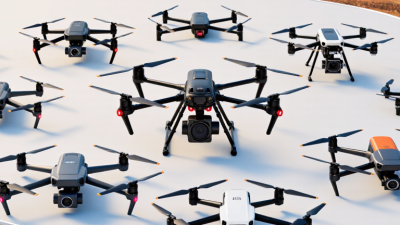
Global buyers should compare aircraft by task, environment, and support needs—not headline range alone. These ten configurations cover common professional uses, though performance varies by payload, weather, and setup.

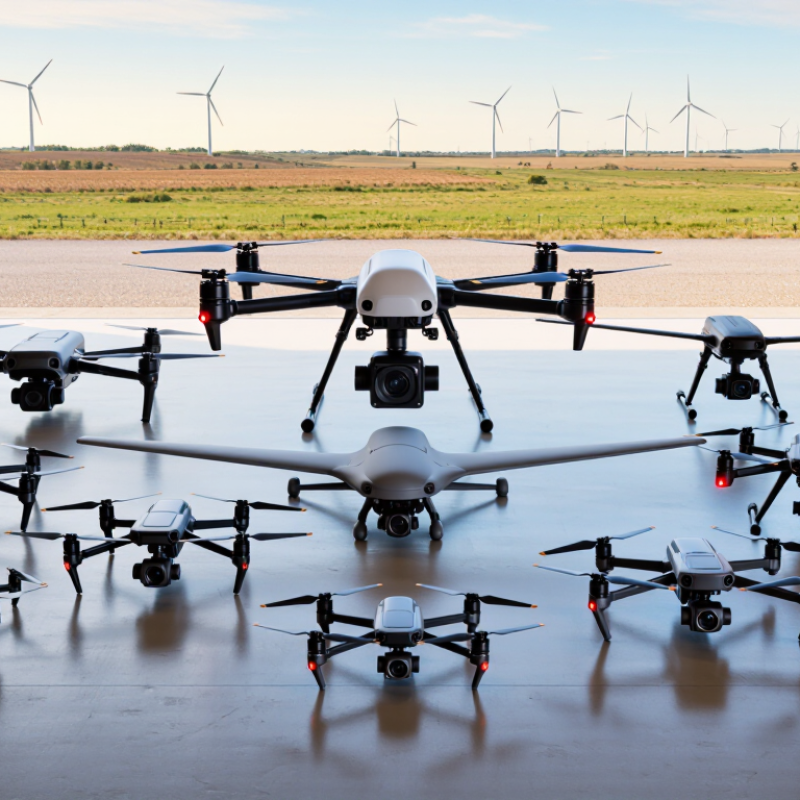
1. A compact quadcopter suits close-range inspection around roofs and equipment. 2. A foldable camera aircraft travels easily between sites. 3. A fixed-wing mapping aircraft covers broad areas efficiently. 4. A vertical-takeoff hybrid combines runway-free launch with longer survey flights. 5. A hexacopter can carry heavier sensors, but needs more transport space. Small details matter.

6. A coaxial aircraft offers a compact lift-focused design for controlled work. 7. An enclosed-propeller indoor aircraft can reduce contact risk in tight spaces. 8. A thermal-imaging aircraft helps locate heat patterns during infrastructure checks. 9. A multispectral survey aircraft supports crop and vegetation analysis. 10. A tethered aircraft can provide steady observation where a nearby power source is practical.

No configuration fits every buyer. A thermal sensor, for example, may reveal a temperature difference without explaining its cause. Review sample data, replacement-part access, battery availability, training, and service options before purchasing. Confirm import requirements and local operating rules in each intended market. The ranking is not universal; even a capable aircraft can disappoint when its sensors or workflow do not match the job.

10 Best Unmanned Aircraft for Global Buyers? — Ten Unmanned Aircraft Models for Global Buyers
Model Aircraft Class Maximum Takeoff Weight Wingspan Reported Maximum Endurance Approximate Payload Capacity Typical Mission Fit
RQ-4 High-altitude, long-endurance fixed-wing 14,628 kg 39.9 m More than 30 hours About 1,360 kg Wide-area surveillance and long-duration data collection
MQ-9 Medium-altitude, long-endurance fixed-wing About 4,763 kg 20.1 m Up to 27 hours About 1,746 kg Persistent surveillance and multi-sensor operations
MQ-1C Medium-altitude, long-endurance fixed-wing About 1,633 kg About 17.0 m Up to 25 hours About 260 kg Regional surveillance and extended field operations
MQ-8C Uncrewed helicopter About 2,720 kg About 12.8 m rotor diameter Up to 12 hours About 318 kg Ship-based surveillance and operations where a runway is unavailable
RQ-7B Tactical fixed-wing About 204 kg About 4.3 m Up to 9 hours About 27 kg Local-area reconnaissance and tactical mapping
RQ-21A Small tactical fixed-wing About 61 kg About 4.9 m Up to 16 hours About 17 kg Coastal, ship-based, and expeditionary surveillance
TB2 Medium-altitude, long-endurance fixed-wing About 700 kg 12 m Up to 27 hours About 150 kg Persistent observation and light-payload missions
CH-4B Medium-altitude, long-endurance fixed-wing About 1,300 kg About 18 m Up to 30 hours About 345 kg Long-duration observation and multi-payload missions
Wing Loong II Medium-altitude, long-endurance fixed-wing About 4,200 kg About 20.5 m Up to 32 hours About 480 kg Long-range surveillance and high-payload operations
Hermes 900 Medium-altitude, long-endurance fixed-wing About 1,180 kg About 15 m Up to 36 hours About 350 kg Border, maritime, and infrastructure monitoring

Figures are approximate, publicly reported specifications and can vary by aircraft variant, payload, configuration, and operating conditions. Confirm current specifications, export eligibility, airworthiness requirements, communications compatibility, and local operating regulations before procurement.

How Mission Requirements Shape Aircraft Selection

Mission requirements should lead aircraft selection, not headline range or payload claims. A coastal survey needs corrosion resistance, stable imaging, and enough endurance to finish a route with reserve power. A farm inspection may value quick battery changes and low-speed control more. Fixed-wing aircraft can cover long corridors efficiently, while multirotor designs offer precise hovering near assets. There is no universal winner. Small details matter: wind over a ridge, a dusty landing strip, or a camera that adds unexpected weight.

The FAA’s 2024 Aerospace Forecast projects the U.S. commercial small-drone fleet could approach 955,000 aircraft by 2028. That forecast is not a global demand measure, but it signals why buyers should compare support, training, and maintenance alongside airframe specifications.

The World Meteorological Organization’s observing-system guidance also emphasizes reliable, quality-controlled data; for buyers, that means assessing sensor calibration and repeatable flight paths, not just image resolution. Ask suppliers for mission-relevant test records, including flight time under representative payload and wind conditions.

I would treat advertised endurance cautiously. It often describes ideal conditions, not a wet, cold field day. A useful shortlist starts with operating environment, required data quality, launch and recovery space, and realistic daily coverage. Then check whether local maintenance and replacement parts can keep the aircraft working.

One trade-off is easy to miss: a heavier sensor may improve measurement quality but reduce coverage per flight.

Purchasing, Operating, and Maintaining Unmanned Aircraft

Selecting an unmanned aircraft should begin with the job, not a headline range or camera specification. List the area to cover, expected flight time, payload, and typical weather. A brochure range is not a promise; wind, cold, and a heavier payload can shorten a mission. Small details matter. Check battery availability, charging time, spare-part access, and whether local technicians can support the equipment. Ask for a demonstration using a realistic payload, not an ideal setup.

Operating well takes preparation. Train operators on pre-flight checks, weather limits, battery handling, and emergency procedures. Review airspace requirements and obtain any necessary permissions before flying. Keep flights within the aircraft’s stated limits, and record dates, locations, battery cycles, and faults. A simple logbook can reveal recurring problems before they interrupt work. Weather changes everything. Still, teams sometimes plan too tightly and leave no time for delays; build in a buffer.

Maintenance should follow the manufacturer’s schedule and the aircraft’s actual use. Inspect propellers, motors, connectors, landing gear, and battery condition after demanding flights. Store batteries as instructed, and replace damaged parts rather than improvising repairs. Before purchase, compare warranty terms, repair turnaround, software support, and training costs—not just the initial price. The “best” aircraft may change once support and operating costs are counted. Revisit your requirements after the first few months; real workloads often expose assumptions that looked sensible on paper.