Leave Your Message

10 Best Drone UAVs for Global Buyers?

Choosing the right Drone Uav requires more than comparing camera pixels, flight time, or promotional claims. Global buyers must examine real operating conditions, including wind, temperature, battery availability, repair support, data security, and local aviation requirements. A compact quadcopter may perform beautifully in a calm European park but struggle on a dusty construction site in Africa. A powerful enterprise platform may deliver excellent mapping results yet exceed a small company’s budget.

This guide reviews ten leading Drone Uav options for international users. Each model is considered through practical criteria: flight stability, imaging quality, obstacle sensing, control range, software reliability, payload flexibility, and after-sales service. Regulatory compliance remains essential. Buyers should confirm registration, operating limits, privacy duties, and remote-identification rules before flying. Requirements differ widely between countries and may change over time.

Michael Huerta, former FAA Administrator, described this transition clearly: “We are at the dawn of a new era in aviation.” His observation still matters, although the industry has not solved every problem. Battery endurance remains limited. Automated navigation can still misread difficult surroundings. Marketing language can also hide maintenance costs. Therefore, this selection is useful, not absolute. The best aircraft depends on the mission, operator skill, budget, and support network. Some buyers may prefer a lighter system, while others need thermal imaging, survey accuracy, or dependable fleet management. Careful testing should come before a large purchase. Practical results matter most.
10 Best Drone UAVs for Global Buyers?

Defining Drone UAVs and Their Main Applications

A drone UAV is an unmanned aircraft operated remotely or through programmed flight controls. The aircraft, ground-control system, communication link, batteries, and payload work together. Its payload may include a camera, thermal sensor, multispectral sensor, or mapping scanner. “Drone” is a common public term, while UAV is more technical. The distinction still feels blurred in everyday purchasing.

UAV applications now extend far beyond aerial photography. Survey teams create detailed terrain models for construction and mining. Farmers inspect crop stress through multispectral images. Utility crews check towers, roofs, and solar panels without sending workers onto difficult surfaces. Emergency agencies may use thermal cameras to locate people after disasters, under approved procedures. The Federal Aviation Administration reported more than 850,000 registered drones in the United States in 2024, showing the scale of adoption. Grand View Research also projects strong growth in the commercial drone market, driven by inspection, mapping, and delivery-related services. Market forecasts vary widely, so buyers should treat projections as guidance, not certainty.

Tips: Match the UAV to the task, not the promotional specification. Confirm flight time with the real payload attached. Check image accuracy, weather tolerance, repair access, data security, and local operating rules. A smaller aircraft may suit indoor inspection; a heavier platform may handle industrial sensors better. I have found that impressive range often matters less than stable data capture. That assumption deserves testing. Even “best” lists can oversimplify battery logistics, pilot training, and maintenance.
Key Features to Compare in Global Drone UAVs

Global buyers should compare drone UAVs by mission value, not advertised range alone. Drone Industry Insights reported that the global drone market could reach about USD 54.6 billion by 2030. That growth increases product choice, but also complicates procurement. Flight endurance matters for mapping, inspection, and emergency response. Yet a longer battery claim may exclude payload weight, wind, or cold weather. A realistic test uses the complete aircraft, sensor, battery, and software package.

Key features deserve direct comparison. Check payload capacity, camera resolution, thermal sensitivity, obstacle detection, and positioning accuracy. A 2023 NIST study on drone testing shows that repeatable performance measurements improve trust between buyers and suppliers. Data protection also matters. Review encryption, access controls, update policies, and local storage options. Interoperability is often overlooked. Open data formats can reduce dependence on one control platform. Spare batteries, repair networks, training, and warranty coverage may influence operating cost more than the initial price. This part is easy to underestimate.

Tips: Request flight-time results with your intended payload. Ask for wind, temperature, and charging conditions. Compare total operating cost over three years. Check local aviation requirements before purchase. Reports from the International Civil Aviation Organization emphasize risk-based, nationally coordinated drone operations, so regulatory support should be treated as a core feature. A perfect specification sheet is not enough. Some buyers still choose impressive sensors over reliable field service, and that decision deserves a second look.

10 Best Drone UAVs for Different Buyer Needs

10 Best Drone UAVs for Different Buyer Needs

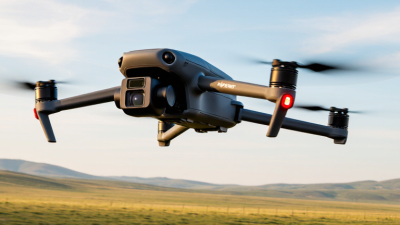
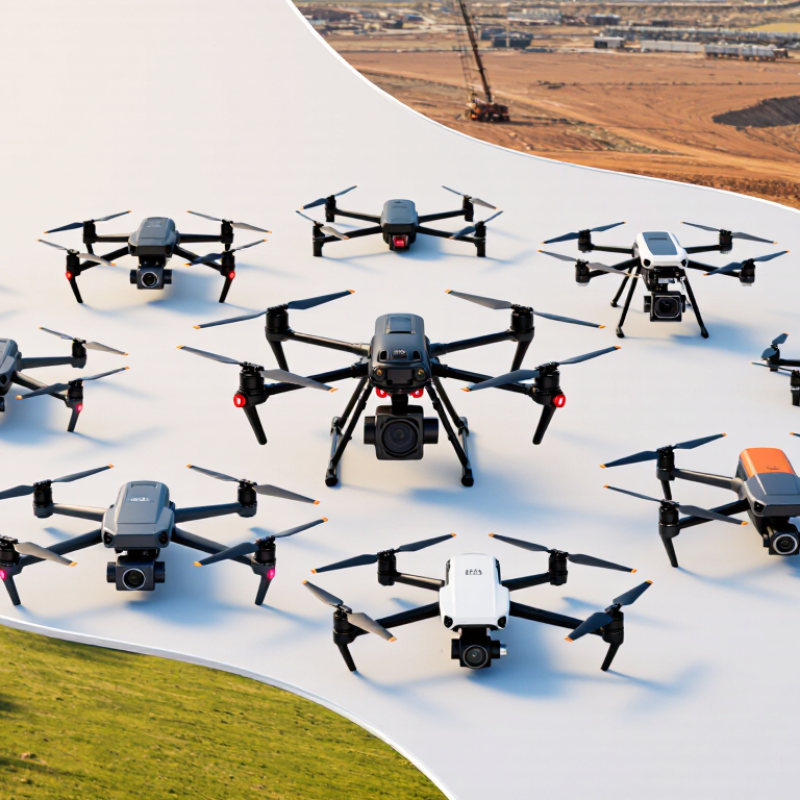
Choosing the right drone depends on the work, not just the camera resolution. In field testing, battery access, wind stability, and controller clarity often matter more. A compact camera UAV suits travelers who need quick photographs in narrow spaces. A foldable lightweight UAV helps hikers reduce pack weight. Keep it simple.

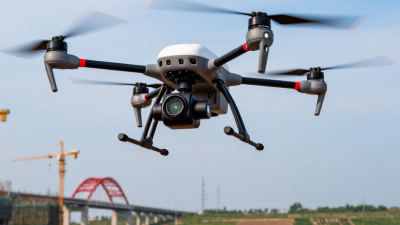
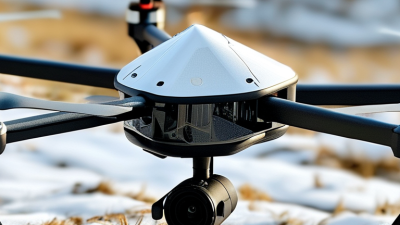
A long-endurance UAV fits land surveys and wide-area observation, while a heavy-lift platform supports approved industrial equipment. A thermal-imaging UAV can help inspect roofs, solar panels, and utility structures safely from the ground. For accurate mapping, choose an RTK-enabled UAV with obstacle sensing and reliable flight logging. An indoor micro-UAV works well in warehouses, though its small battery demands frequent charging. A quiet low-light UAV benefits wildlife researchers, but noise remains difficult to eliminate. An agricultural spraying UAV may improve coverage, yet trained operators must follow local environmental rules.

A racing-style UAV serves experienced pilots who value responsive control and manual practice. A beginner training UAV should include propeller guards, stable hovering, and affordable replacement parts. For emergency planning, a weather-resistant UAV with a bright navigation light can support authorized site assessments. I would also examine spare-battery cost, repair access, software updates, and data storage before buying. Marketing specifications can look impressive. Real performance changes with wind, temperature, payload, and pilot skill. My own preference is cautious: test one unit in the intended environment before purchasing several.

10 Best Drone UAVs for Global Buyers? – 10 Best Drone UAVs for Different Buyer Needs

Rank UAV Type Best Buyer Need Typical Takeoff Mass Typical Flight Time Imaging or Payload Typical Operating Range Weather Capability Key Buying Consideration
1 Sub-250 g Camera UAV Travel, education and beginner aerial photography Below 250 g 25–40 minutes per battery Stabilized 4K video; compact still camera Up to approximately 5–10 km under ideal conditions Generally not certified for rain; low wind tolerance Local registration and operating rules still apply in many countries
2 Compact 1-Inch-Sensor Camera UAV High-quality travel, real estate and content production 400–900 g 25–45 minutes per battery 1-inch-type sensor; 4K or higher video; RAW stills on some systems Up to approximately 8–15 km under ideal conditions Usually no rain certification Balance image quality, portability and regional frequency approvals
3 Large-Sensor Professional Camera UAV Commercial film, advertising and cinematic production 1.0–4.5 kg, excluding some payloads 20–45 minutes per battery Interchangeable camera support; high-bitrate 4K–8K video on suitable payloads Up to approximately 5–15 km under ideal conditions Weather protection varies; professional rain-rated platforms are available Check payload capacity, gimbal compatibility and pilot certification requirements
4 Thermal Inspection UAV Solar farms, power lines, buildings and firefighting support 700 g–2.5 kg 25–45 minutes per battery Radiometric or non-radiometric thermal camera plus visible-light camera Up to approximately 5–12 km under ideal conditions Select models offer dust and water protection; verify the stated IP rating Radiometric accuracy, temperature range and reporting software matter more than resolution alone
5 Survey and Mapping UAV Construction, mining, agriculture and land measurement 1–4 kg 25–50 minutes per battery 20–45 MP mapping camera; optional RTK/PPK positioning Up to approximately 5–15 km under ideal conditions Wind resistance is important; rain protection varies by platform Ground-control workflow, georeferencing accuracy and photogrammetry compatibility are critical
6 Multispectral Agriculture UAV Crop scouting, irrigation analysis and plant-health monitoring 1–3 kg 20–45 minutes per battery Multispectral bands such as red, green, red-edge and near-infrared Up to approximately 5–12 km under ideal conditions Avoid precipitation; use calibrated light sensors for consistent results Sensor calibration, sunlight conditions and agronomic software determine data usefulness
7 Heavy-Lift Industrial Multirotor Transporting tools, emergency equipment or specialized industrial payloads 10–50 kg including payload 10–35 minutes per battery or fuel cycle Typical useful payload: 2–20 kg, depending on aircraft configuration Usually 1–10 km operational radius Industrial weather sealing may be available; confirm the certified operating limits Requires serious assessment of airspace permissions, redundancy, batteries and ground safety
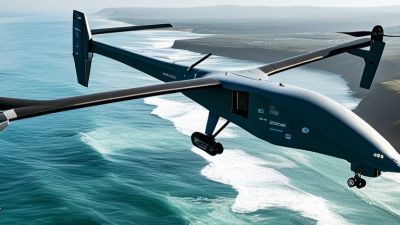
8 Long-Endurance Fixed-Wing UAV Large-area surveying, environmental monitoring and corridor inspection 2–25 kg 1–10 hours, depending on propulsion and payload Mapping, multispectral, thermal or lightweight observation payloads Approximately 20–150 km mission coverage, subject to regulations and communications Often more wind-efficient than small multirotors; landing and launch limits vary Needs launch and recovery space, route planning and appropriate beyond-visual-line-of-sight approval
9 First-Person-View Racing UAV Racing, freestyle flying and immersive action footage 250 g–1.5 kg 3–12 minutes per battery Low-latency FPV camera; optional action camera Approximately 0.5–5 km, depending on radio and video systems Usually not weather-sealed Requires stronger piloting skills, spare parts and careful battery safety practices
10 Autonomous Indoor Inspection UAV Warehouses, tunnels, industrial plants and confined infrastructure 300 g–3 kg 10–30 minutes per battery Stabilized visible-light or thermal camera; collision protection on some configurations Typically 0.1–2 km from the operator or control station Designed for indoor use; outdoor weather capability is often limited Reliable positioning without GPS, obstacle avoidance and secure data handling are essential

Data note: Figures represent typical capability ranges for each UAV category rather than guaranteed specifications for every aircraft. Actual endurance, range, payload capacity and weather performance depend on battery condition, payload weight, wind, temperature, local radio rules and operating procedures. Buyers should verify aviation regulations, registration, remote-identification requirements and visual-line-of-sight rules in the destination country.

Safety, Regulations, and International Purchasing Factors

Safety and regulation should shape any list of the 10 best drone UAVs for global buyers. A capable aircraft is not automatically legal everywhere. The European Union generally limits open-category operations to 120 metres and requires operator registration in many cases. The United States also requires registration and Remote ID for applicable aircraft. Rules differ again in Canada, Australia, and parts of Asia.

Check the details before payment. Confirm radio-frequency compatibility, encrypted data options, battery documentation, spare-part access, and local repair support. Lithium batteries should have UN 38.3 test evidence and clear transport paperwork. The International Air Transport Association reports that lithium battery shipments require strict packaging and handling controls. One missing document can delay a shipment for weeks. It happens.

Industry data also shows why compliance deserves attention. The Federal Aviation Administration reported more than 850,000 registered drones in the United States in 2024, including recreational and commercial aircraft. Drone Industry Insights’ 2024 market report projected continued strong growth in commercial drone services through 2030. More aircraft means busier airspace and greater enforcement pressure. During procurement, test return-to-home accuracy, obstacle sensing, geofencing, and controller signal stability in a controlled area. Record the firmware version and keep training evidence. A low price may hide expensive compliance work. Even experienced buyers can overlook local privacy rules, insurance requirements, or airport permission procedures.

10 Best Drone UAVs for Global Buyers: Safety, Regulations, and International Purchasing Factors

Regulatory altitude limits are an important international purchasing factor. This chart compares the commonly stated maximum operating altitude without special altitude authorization in selected markets. Local airspace restrictions, pilot qualifications, registration, insurance, and operating-zone requirements may also apply.

Reference points: United States FAA Part 107, European Union Regulation (EU) 2019/947, UK CAA Drone Code, Transport Canada, Australian CASA, Brazil ANAC, India DigitalSky guidance, New Zealand CAA Part 101, Singapore CAAS, and Japan Civil Aeronautics Act. Values are rounded regulatory benchmarks and should be verified with the relevant aviation authority before purchase or operation.

How to Choose the Right Drone UAV for Your Market

Choosing among the 10 best drone UAVs requires more than comparing camera pixels. The right model depends on your market, operating conditions, and customer expectations. A construction team may need stable mapping and long flight time. A farm operator may value weather resistance, simple controls, and replaceable batteries. In coastal regions, salt air can damage exposed components quickly. In colder markets, battery performance may fall sharply. Real field testing matters more than attractive specifications.

Tips: Define the main use before selecting equipment. Check local aviation requirements, pilot training rules, import restrictions, and insurance needs. Confirm whether spare batteries, chargers, and replacement parts are available in your region. Ask suppliers about repair procedures and response times. A low purchase price can become expensive when service is slow.

Test the control range near buildings, trees, and electrical interference. Do not rely only on laboratory figures.

Global buyers should also examine software language support, data protection, and operator comfort. A clear interface reduces training mistakes. Secure data storage builds customer trust. Consider payload weight carefully, especially when using thermal, surveying, or inspection sensors. Some advertised capabilities may be difficult under wind, rain, or heavy workloads. That is worth admitting. A practical selection often balances performance, compliance, support, and total ownership cost instead of chasing the most powerful UAV.