Leave Your Message

What Are the Top X Wing Drone Suppliers?

Choosing the right X Wing Drone supplier requires more than comparing product pages or advertised flight times. Buyers should examine aircraft design, payload capacity, endurance, navigation systems, manufacturing consistency, and after-sales support. These details matter in real conditions, where wind, temperature, battery aging, and communication range can change performance quickly.

Marc Piette, founder of Xwing, has emphasized a practical industry principle: “Autonomy can make aviation safer, more accessible, and more efficient.” This idea helps frame our review of the top X Wing Drone suppliers. The strongest companies should demonstrate reliable testing, transparent specifications, trained technical teams, and documented maintenance procedures. They should also explain limitations clearly. That is important.

A capable supplier is not always the largest supplier. Some smaller manufacturers offer better customization, faster support, or stronger regional expertise. Others may present attractive specifications without enough independent evidence. That weakness deserves attention. Our comparison will consider product quality, engineering experience, operational reliability, service coverage, compliance awareness, and customer feedback. We will also distinguish between established suppliers and emerging companies with promising, but incomplete, records.

No ranking can fit every buyer. A mapping team may value endurance, while an inspection company may prioritize stability and camera integration. Public agencies may require detailed documentation and dependable support. This guide provides a practical starting point, not a final purchasing decision. Verify current specifications directly with each supplier before making a commitment.
What Are the Top X Wing Drone Suppliers?

What Is an X-Wing Drone and How Does It Work?

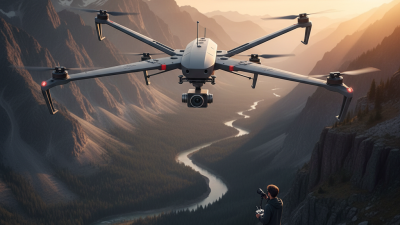
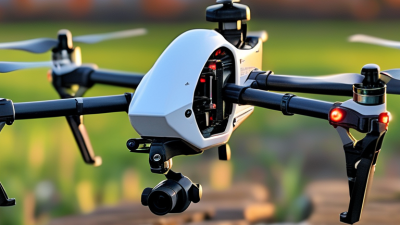
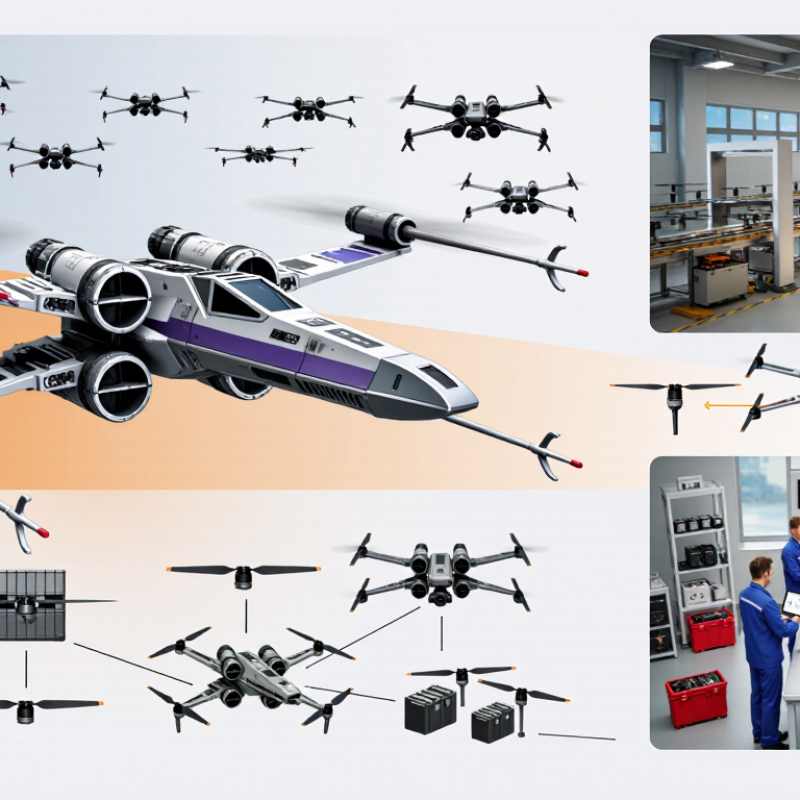
An X-wing drone is usually a fixed-wing aircraft with four lifting surfaces arranged in an X pattern. Unlike a conventional airplane drone, it can distribute lift across multiple wings. This design may improve stability during turns and reduce structural stress. The term is not fully standardized, however.

Many X-wing platforms use vertical takeoff and landing motors, then switch to efficient forward flight. During takeoff, the rotors push air downward. In cruise, the wings generate most of the lift, while a rear propeller provides thrust. This transition saves battery power compared with continuous hovering. It can also create control problems in gusty weather. That detail matters.

The Association for Uncrewed Vehicle Systems International reported strong growth in commercial drone adoption, especially for inspection, mapping, and infrastructure work. MarketsandMarkets estimated the global drone market could grow from about 34 billion dollars in 2024 to over 55 billion dollars by 2029. These figures help explain supplier interest in hybrid aircraft, but they do not prove every X-wing design is commercially ready. Buyers should examine endurance, payload, transition reliability, battery cycle data, maintenance access, and operator training. In field testing, a claimed 90-minute flight may fall sharply under wind, payload, or cold conditions. Supplier comparisons should rely on independently recorded flight logs, not attractive brochures.


Which Features Define a Reliable X-Wing Drone Supplier?

A reliable X-wing drone supplier proves performance beyond a polished demonstration. The aircraft should show measured endurance, payload capacity, wind tolerance, and recovery behavior. Drone Industry Insights reported continued double-digit growth in commercial drone services through 2024, increasing pressure on suppliers to publish credible test evidence. Ask for flight logs, not only brochure figures. A spreadsheet is not proof.

Engineering transparency matters. Suppliers should disclose battery cycle limits, propulsion inspection intervals, communication redundancy, and software update procedures. NIST’s UAS testing guidance emphasizes repeatable measurements for navigation, sensing, and operational performance. That makes independent evaluation easier. Look for tests conducted under changing temperatures and uneven terrain. A perfect indoor flight proves little.

Service quality often decides whether an X-wing platform remains useful after purchase. Check spare-part availability, technician response times, pilot training, cybersecurity controls, and data-handling policies. EASA’s Annual Safety Review repeatedly highlights human factors and operational discipline as important safety concerns. Suppliers should therefore provide maintenance records and clear failure procedures. They should also explain how the aircraft lands after lost communications. I would still request customer references and inspect an active aircraft, because promised support can become vague after payment. Reliability is demonstrated slowly.

Who Are the Leading X-Wing Drone Suppliers?

Leading X-wing drone suppliers are increasingly judged by engineering depth, not glossy specifications. These aircraft combine fixed-wing efficiency with vertical takeoff, making them useful for corridor mapping, infrastructure inspection, and wide-area surveying. Drone Industry Insights reported continued growth in commercial drone services in its 2024 market review, with data collection remaining a major application. That trend favors suppliers offering dependable sensors, mission planning, and repeatable flight performance.

The strongest suppliers usually provide aircraft with long endurance, modular payload bays, and reliable transition control between hovering and forward flight. MarketsandMarkets has identified hybrid and fixed-wing systems as important segments within the expanding commercial drone market. Buyers should examine practical details: battery replacement time, wind tolerance, landing accuracy, and training requirements. Small details matter.

A credible supplier also publishes test methods, maintenance intervals, and operating limits. The FAA’s recent aerospace forecasts continue to emphasize safety management and integration for expanding unmanned aircraft operations. Suppliers supporting remote identification, documented maintenance, and pilot training therefore deserve closer attention. Yet, published endurance figures can be optimistic. Field results may fall sharply in cold weather or strong headwinds. That is where supplier transparency becomes valuable. Requesting independent flight logs, sample inspection reports, and regional service response times can reveal more than a demonstration flight. I would also question unusually high range claims. They may depend on ideal payloads and calm air.

What Are the Top X-Wing Drone Suppliers?

Supplier-neutral benchmark of commonly published capabilities for commercial X-wing VTOL drones. The chart focuses on measurable procurement dimensions rather than company or brand names.

The benchmark uses representative midpoint values from publicly documented commercial X-wing drone specifications. Actual performance varies by aircraft configuration, payload, weather, battery, and regulatory operating conditions.

How Do X-Wing Drone Suppliers Compare by Product and Service?

What Are the Top X Wing Drone Suppliers?

X-wing drone suppliers differ most in flight design, payload control, and field support. The term usually describes fixed-wing aircraft with vertical takeoff capability. This layout reduces runway needs while preserving efficient forward flight. Grand View Research valued the global drone market at USD 73.06 billion in 2022. Its forecast also indicates strong growth through 2030. That growth does not make every supplier equally capable.

Product comparison should begin with measurable operating details. Check endurance, cruise speed, payload capacity, wind tolerance, and landing accuracy. A mapping payload may need stable altitude and centimeter-level positioning. A thermal sensor needs clean data, not merely a higher megapixel count. Some suppliers offer modular bays, while others lock customers into one configuration. That difference affects future operating costs. Battery replacement intervals matter too. Small omissions become expensive.

Service quality separates promising suppliers from dependable ones. Compare pilot training, mission-planning software, firmware support, spare-part access, and repair times. The FAA’s Aerospace Forecast 2024–2044 highlights continuing growth in unmanned aviation activity, but operational readiness remains uneven. Suppliers should provide documented maintenance schedules and clear safety procedures. Ask for measured performance in rain, heat, and crosswinds. Marketing claims rarely show those conditions. I would also request customer references from similar terrain. This is imperfect evidence, but silence is worse. MarketsandMarkets projects substantial commercial drone expansion this decade, increasing pressure on suppliers to scale support, not just production.

What Are the Top X-Wing Drone Suppliers? - How Do X-Wing Drone Suppliers Compare by Product and Service?

Anonymous comparison of representative X-wing fixed-wing VTOL drone supplier profiles

Supplier Profile Typical X-Wing Configuration Primary Application Maximum Endurance Typical Operational Range Maximum Payload Launch and Recovery Navigation and Autonomy Payload Integration After-Sales Service Training and Support Best Fit
Supplier Profile A Medium electric VTOL fixed-wing platform with four lift motors and one cruise motor Mapping, surveying, inspection, and environmental monitoring Up to 90 minutes under light-payload conditions 20–60 km mission radius, depending on radio and regulatory limits 1.0–1.5 kg Vertical takeoff and landing; no runway required Advanced
GNSS-assisted autopilot, route planning, return-to-home, and automatic VTOL transition
RGB, multispectral, thermal, and compact LiDAR options Strong
Spare parts availability and preventive-maintenance schedules
Remote onboarding, operator training, and application workflows Professional surveying teams requiring flexible payload options
Supplier Profile B Compact electric VTOL aircraft optimized for rapid deployment Construction progress, agriculture, utilities, and security observation 45–70 minutes 10–35 km mission radius 0.5–1.0 kg Vertical takeoff and landing from confined sites Advanced
Waypoint navigation, geofencing, terrain-aware flight planning, and automated landing assistance
Integrated RGB and thermal cameras; limited third-party payload support Good
Standard warranty and common replacement components
Online manuals, video training, and scheduled technical support Organizations prioritizing portability and straightforward operation
Supplier Profile C Long-endurance hybrid-electric VTOL fixed-wing system Linear infrastructure inspection, coastal monitoring, and large-area mapping 2–4 hours, subject to energy source and payload 50–150 km mission radius with approved communications equipment 2–5 kg VTOL capability with optional assisted recovery procedures Advanced
Redundant navigation options, automated contingency procedures, and mission-data logging
High-capacity EO/IR, multispectral, LiDAR, and custom sensor integration Strong
Field service, integration engineering, and scheduled inspections
On-site commissioning, advanced pilot training, and mission planning assistance Large-area missions where endurance and payload capacity are priorities
Supplier Profile D Lightweight foam or composite electric VTOL aircraft for routine data collection Education, basic GIS, agriculture, and small-site inspection 35–60 minutes 5–20 km mission radius 0.3–0.8 kg Vertical takeoff and landing; simple field setup Standard
GNSS navigation, waypoint missions, manual override, and basic failsafe functions
Fixed or semi-integrated RGB and multispectral camera packages Good
Basic warranty, battery replacement, and remote troubleshooting
Self-guided setup materials and basic operator instruction Entry-level users seeking lower acquisition and operating costs
Supplier Profile E Ruggedized electric VTOL platform designed for repeated field operations Mining, emergency response, public safety, and industrial inspection 60–120 minutes 20–80 km mission radius 1–3 kg VTOL launch and recovery with wind-resistant landing modes Advanced
Encrypted command links, redundant sensors, obstacle-awareness options, and automated emergency procedures
Thermal, zoom, low-light, multispectral, and stabilized gimbal payloads Strong
Service-level options, repair center access, and fleet-management support
On-site training, compliance documentation, and operational consulting Critical operations requiring durability, reliability, and structured support
Supplier Profile F Modular VTOL fixed-wing platform with interchangeable nose and belly payload bays Research, wildlife surveys, water-quality monitoring, and custom projects 60–100 minutes 15–70 km mission radius 0.8–2.5 kg Vertical takeoff and landing; modular field transport Good
Autopilot, waypoint missions, manual intervention, and configurable failsafe settings
Open integration approach for cameras, sensors, and research instruments Good
Engineering support available for approved integrations
Technical documentation, integration guidance, and project-based training Research institutions and users with specialized sensing requirements
Supplier Profile G Transportable electric VTOL aircraft emphasizing rapid battery-based field turnaround Commercial inspection, land management, and recurring survey programs 50–85 minutes 15–50 km mission radius 0.7–1.8 kg VTOL operation with portable ground equipment Good
Automated mission planning, route replay, geofencing, and standard return-to-home functions
RGB, thermal, and multispectral payload packages Strong
Fleet maintenance plans, battery-health monitoring, and software updates
Subscription-based software support and recurring operator training Service providers operating several aircraft on regular schedules
Data note: The figures are representative published-specification ranges for commercially available X-wing fixed-wing VTOL drone classes. Actual endurance, range, payload capacity, communications distance, and service coverage vary with aircraft configuration, battery or fuel load, weather, payload, terrain, local aviation regulations, and mission profile. Supplier identities and brand-specific information have been intentionally omitted.

What Should Buyers Consider Before Choosing a Supplier?

What Are the Top X Wing Drone Suppliers? What Should Buyers Consider Before Choosing a Supplier?

Choosing an X-wing drone supplier requires more than comparing flight prices. Grand View Research estimates that the global commercial drone market could grow at a 13.9% annual rate through 2030. That growth attracts capable suppliers, but also inexperienced entrants. Buyers should verify flight endurance, payload capacity, weather tolerance, and landing accuracy through documented field tests. A polished demonstration is not enough.

The FAA’s 2024 Aerospace Forecast projects the U.S. commercial small-drone fleet could approach 1.18 million aircraft by 2029. This expansion increases the value of dependable maintenance and training. Ask suppliers for battery-cycle data, spare-part availability, software update policies, and repair response times. Check whether the control system supports encrypted links and detailed flight logs. These details affect daily operations more than advertised range.

Look beyond the brochure.

A supplier should explain how its aircraft performs in wind, rain, uneven terrain, and repeated takeoffs. Request references from comparable missions, not just laboratory trials. Total cost should include batteries, sensors, training, insurance requirements, and downtime. I have seen buyers focus heavily on airframe price and underestimate integration work. That mistake is easy to repeat. A small pilot project, with measurable delivery and reliability targets, can expose weaknesses before a larger purchase.