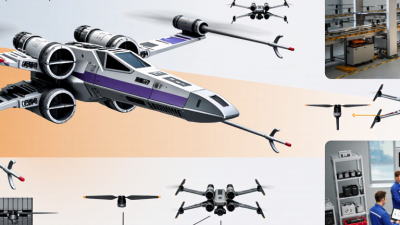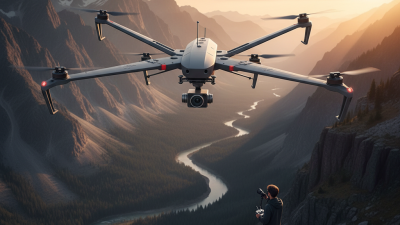
China’s X Wing Drone sector has moved beyond prototypes and marketing claims. Manufacturers now serve agriculture, surveying, emergency response, inspection, and long-range mapping. For global buyers, the difficult question is not simply who produces the most aircraft. It is who can deliver consistent performance, documentation, training, and dependable after-sales support.
Brendan Schulman, a well-known drone industry lawyer and former DJI executive, offered a practical warning: “Drones are aircraft, not toys.” That principle matters when evaluating an X Wing Drone. Buyers should examine flight endurance, payload balance, transition control, communication range, battery safety, weather resistance, and ground-station usability. A polished product photo proves very little. Field test records matter more.
This guide reviews ten leading Chinese manufacturers for international procurement teams. The selection considers manufacturing experience, export capability, engineering depth, customization options, compliance support, and service responsiveness. It also considers less visible details, such as spare-part availability, firmware update procedures, packaging quality, and the clarity of English manuals. Small details become expensive problems later.
No ranking is perfect. Company capabilities can change quickly. Public specifications may also differ from real operating conditions. Therefore, readers should request current test data and verify certifications independently. A promising X Wing Drone may still require careful integration with local airspace procedures, insurance requirements, and operator training. That is not a weakness of one country. It is the reality of buying advanced aircraft across borders.
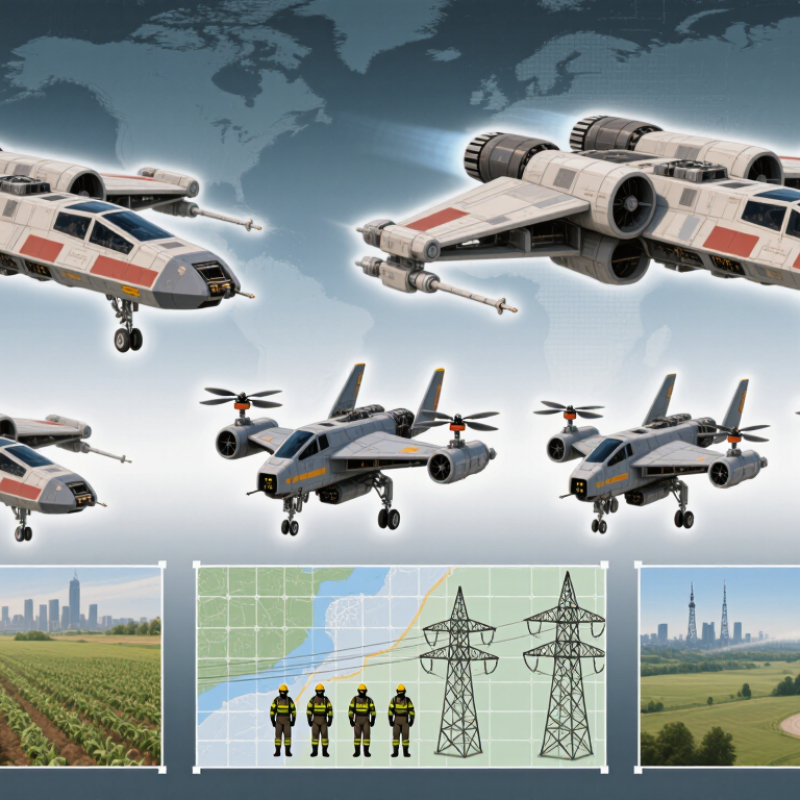
X‐wing drones combine vertical takeoff with efficient fixed-wing flight. Their lift rotors raise the aircraft from small clear areas. After climbing, the wing carries most of the load. This transition reduces energy use during forward flight, but it requires careful control tuning. A poorly balanced transition can cause altitude loss. That detail deserves attention.
Payload capacity depends on more than the advertised maximum weight. Cameras, batteries, mounts, and safety equipment all consume useful capacity. A practical buyer should check the payload center of gravity and vibration limits. These factors affect image quality and flight stability. Range also changes with wind, temperature, terrain, and return reserves. A claimed range is not a promise. Real performance is messier.
Endurance is usually measured under controlled conditions. A drone carrying a full sensor package may stay airborne for less time. Battery age matters too. Operators should request test data, maintenance records, and flight logs when comparing manufacturers. Short field trials can reveal launch behavior, landing accuracy, and transition reliability. Check local aviation requirements before deployment. The best X-wing design is not always the fastest or largest. It should match the mission, pilot skill, recovery area, and acceptable operating risk. Small compromises can become expensive surprises.

China’s UAV industry is expanding beyond consumer aircraft. CAAC data shows more than one million registered civilian drones, with flight activity reaching millions of hours annually. These figures indicate strong demand for surveying, mapping, inspection, logistics trials, and emergency support. However, registration totals include many aircraft types, not only fixed-wing or X-wing models.
MIIT market data adds an industrial perspective. It tracks intelligent manufacturing, communication equipment, industrial investment, and related supply-chain development. For global buyers, this matters because an X-wing drone depends on more than its airframe. Motors, batteries, navigation systems, ground stations, and production testing all affect reliability. Factory scale can help, but it does not automatically prove field performance. Buyers should request dated test records, payload results, endurance conditions, and maintenance procedures. Some published figures remain difficult to compare because reporting methods differ. That deserves attention.
Tips: Compare CAAC registration evidence with MIIT manufacturing information. Ask whether endurance was measured in wind, with payload, or under ideal conditions. A practical trial is still more convincing than a polished brochure. Check software updates, spare-part access, training, and export documentation before ordering. Small details often expose large operational risks.
| No. | Market Indicator | Reported Figure | Unit / Period | Why It Matters for X-Wing UAV Buyers | Official Reference |
|---|---|---|---|---|---|
| 1 | Registered civil unmanned aircraft | Approximately 1.267 million | Aircraft; 2023 | Shows the scale of China’s civil UAV installed base and the depth of the domestic operating market. | CAAC, 2023 civil aviation industry statistics |
| 2 | Civil UAV flight activity | Approximately 23.11 million | Flight hours; 2023 | High utilization supports demand for efficient fixed-wing and vertical-take-off-and-landing platforms. | CAAC, 2023 civil aviation industry statistics |
| 3 | Year-on-year growth in civil UAV flight hours | 11.8% | Annual growth; 2023 | Indicates continued expansion in aerial surveying, inspection, mapping, logistics and public-service missions. | CAAC, 2023 civil aviation industry statistics |
| 4 | Average monthly civil UAV flight activity | Approximately 1.93 million | Flight hours; derived from 2023 total | Provides a practical reference for estimating market utilization and service-support requirements. | Calculated from CAAC’s 2023 annual total |
| 5 | Light unmanned aircraft mass category | More than 7 kg and up to 116 kg | Maximum take-off mass | Many commercial X-wing and VTOL fixed-wing aircraft fall within this regulatory range, depending on configuration. | CAAC unmanned aircraft regulatory classification |
| 6 | Medium unmanned aircraft mass category | More than 116 kg and up to 5,700 kg | Maximum take-off mass | Relevant to larger cargo, long-endurance, industrial and specialized aviation applications. | CAAC unmanned aircraft regulatory classification |
| 7 | China’s manufacturing value added | Approximately 33.5 trillion yuan | Annual value; 2023 | Reflects the broad industrial base supporting airframes, motors, batteries, sensors, electronics and precision manufacturing. | MIIT, 2023 manufacturing industry overview |
| 8 | Manufacturing share of global manufacturing value added | Approximately 26.2% | Global share; 2023 | Helps explain China’s strong supply-chain capacity for scalable UAV production and component sourcing. | MIIT, 2023 manufacturing industry overview |
| 9 | Software industry business revenue | Approximately 12.33 trillion yuan | Annual revenue; 2023 | Software, cloud platforms, navigation systems, mission planning and data processing are essential to modern X-wing UAV operations. | MIIT, 2023 software industry statistics |
| 10 | Industrial robot production | Approximately 429,000 sets | Annual output; 2023 | Indicates the availability of automation technologies used in repeatable assembly, testing and quality-control processes. | MIIT, 2023 industrial economy statistics |
Note: This table presents publicly reported CAAC and MIIT market and regulatory indicators. It does not rank, identify or disclose any manufacturer or brand-level data.
China’s top 10 X-wing drone manufacturers should be ranked through measurable evidence, not attractive product pages. Payload capacity matters, but usable payload matters more. A platform carrying five kilograms may lose stability, flight time, or image quality. Reviewers should request payload test reports, battery data, and flight footage under comparable conditions.
Range needs careful interpretation. “Long range” may describe ideal open-field testing with no wind or signal obstacles. Ask for control distance, video transmission distance, and operating conditions separately. Endurance should be checked with a defined payload, battery type, temperature, and wind speed. Empty-airframe endurance is useful, but it can mislead buyers. Real work is heavier.
ISO evidence adds confidence, but certificates require verification. Check the certificate number, issuing body, scope, and validity date. ISO 9001 can support confidence in quality processes, yet it does not guarantee drone performance. Strong suppliers also provide inspection records, calibration documents, service procedures, and traceable component information. Factory audits and sample testing reveal practical weaknesses. No ranking is perfect. Data can still be incomplete. A transparent scoring model should give weight to payload, range, endurance, documentation, and after-sales response. Sometimes, the second-ranked manufacturer offers the safer purchase because its evidence is clearer.
Evidence-based weighting for global buyers, prioritizing measurable aircraft performance and verifiable quality documentation.
Payload, range, and endurance should be compared using consistent test conditions and published datasheets. ISO evidence refers to a verifiable certificate, certification scope, issuing body, and validity period; ISO 9001 is commonly used to assess quality-management systems. These percentages are a transparent evaluation framework rather than manufacturer-specific results.
China’s leading ten X-wing drone manufacturers focus on hybrid VTOL platforms, not simple quadcopters. Their aircraft combine four lift rotors with fixed wings for efficient cruising. This design supports mapping, corridor inspection, coastal surveying, and emergency logistics. Many platforms carry RGB cameras, multispectral sensors, or lightweight thermal payloads. Flight endurance commonly ranges from 60 to 180 minutes, depending on payload and weather.
Market demand supports this direction. Fortune Business Insights valued the global commercial drone market at about USD 20.98 billion in 2023. It projects the market to reach approximately USD 54.81 billion by 2030. The report identifies inspection, agriculture, and surveying as important growth areas. Chinese suppliers usually offer modular platforms, ground-control software, and repair support. However, advertised endurance often uses ideal conditions. Real missions may reduce flight time by 20% or more.
Tips: Compare payload capacity, wind resistance, spare-part access, and software compatibility. Request mission footage, not only laboratory specifications. Check whether the aircraft can export standard mapping files. A useful field test includes a 10-kilometer route, uneven terrain, and repeated landings. Some buyers focus too heavily on airframe price. That can become an expensive mistake. Evaluate training, batteries, transport cases, and local technical support before selecting a manufacturer.
China Top 10 X Wing Drone Manufacturers for Global Buyers
When comparing China’s top ten X-wing drone manufacturers, export compliance should guide the shortlist. Confirm the aircraft’s customs classification, end-use statement, destination restrictions, and required export permits. Ask for commercial invoices, packing lists, serial-number records, and test reports before payment. Export rules can change. Recheck them.
For European operations, CE marking must match the applicable product legislation; it is not a universal flight approval. EASA rules under Regulations 2019/947 and 2019/945 may affect the drone category, operator registration, remote identification, and operational limits. Request a Declaration of Conformity, risk assessment, battery documentation, and maintenance procedures. A polished certificate folder can still contain gaps. Verify every document with the responsible authority or a qualified compliance adviser.
Tips: Set support KPIs before signing. Require replies within one business day, critical-part quotations within 48 hours, and defined repair or replacement timelines. Measure training hours, firmware notice periods, spare-part availability, and incident-report quality. Request a live demonstration in wind, low temperature, and lost-link conditions. Also test packaging and battery handling at delivery. Small details matter. No checklist is perfect, so record open questions, assign owners, and review compliance before each shipment.