Leave Your Message
Global buyers assessing China’s leading X Wing Drone manufacturers need more than a supplier list. They need evidence of flight performance, production consistency, and support after delivery. The X-wing layout combines multiple lift rotors with forward flight, making payload, endurance, and transition behavior important comparison points. Small details matter. A wiring diagram, a spare propeller, or a clear maintenance schedule can reveal how prepared a supplier is for real operations.
Market data helps explain the opportunity, but it must be read carefully. The Federal Aviation Administration’s 2024–2044 Aerospace Forecast tracks continued growth in U.S. commercial small-drone activity, while emphasizing uncertainty in fleet estimates. That forecast is not an X Wing Drone market study. It does, however, show why buyers increasingly examine reliability, operating costs, and service capacity alongside purchase price. Industry reports from firms such as Drone Industry Insights also track commercial drone adoption and market development; their broad categories should not be mistaken for verified sales of this specific aircraft configuration.
This guide examines ten Chinese manufacturers through practical buyer criteria: stated aircraft specifications, manufacturing capabilities, customization options, documentation, and export support. Claims should be checked against test records and direct supplier discussions. A polished brochure is not flight evidence. Nor does a factory’s location alone establish quality. Some public information may be incomplete, and that limitation deserves attention rather than a confident guess. For global buyers, the strongest shortlist is built on comparable data, transparent communication, and realistic mission requirements.
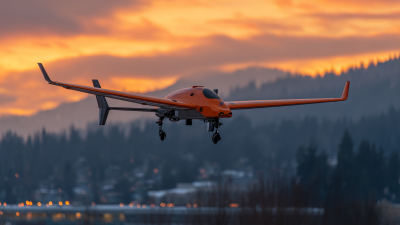
An X-wing drone usually refers to a hybrid aircraft with four lift motors arranged around its body and fixed wings for forward flight. The exact layout can vary. The term is not fully standardized, so buyers should confirm the aircraft’s design rather than rely on its label. During takeoff and landing, the lift motors raise or lower the aircraft vertically. Once airborne, the wings provide lift as it moves forward, which can reduce energy use compared with hovering throughout a mission. The transition between flight modes needs careful control. Wind, payload weight, and battery condition all affect performance.
This configuration can suit long-distance mapping, infrastructure inspection, and environmental surveys where a runway is unavailable. A field team might launch from a small clearing, follow a planned route over farmland, then land near its starting point. That is useful, but not effortless. Operators should check endurance with the intended camera or sensor attached, and review wind limits, landing needs, and data quality in real conditions. For agriculture, an aircraft may help identify uneven crop growth, but it cannot replace ground checks when findings are uncertain. Practical evaluations matter more than brochure range. Reliable results depend on training, maintenance, and a mission plan suited to the site.
Brand-neutral buyer comparison: “X-wing drone” is not a universally standardized aircraft category, and configurations vary among suppliers. The table below is an evaluation framework, not a verified ranking of ten manufacturers. Confirm each aircraft’s configuration and specifications directly with its supplier.
| No. | Manufacturer / Product Area to Assess | What Buyers Should Verify | Why It Matters | Relevant Uses |
|---|---|---|---|---|
| 1 | Airframe and wing configuration | Request drawings and confirm whether “X-wing” describes the wing arrangement, a VTOL layout, or a supplier-specific product name. | The term alone does not establish a standard aircraft design or flight capability. | All missions; especially important when comparing unlike aircraft. |
| 2 | Vertical takeoff and landing system | Check the lift-motor arrangement, transition procedure, landing method, and demonstrated takeoff and landing conditions. | Some fixed-wing VTOL aircraft use separate lift motors; others use a tailsitter configuration. These designs have different operating requirements. | Surveying or inspection from sites without a runway. |
| 3 | Payload and sensor integration | Verify compatible payload types, mounting interfaces, power supply, data connections, and payload limits for the proposed configuration. | The usable payload affects aircraft balance, flight performance, and the quality of collected data. | Mapping, photogrammetry, thermal inspection, and environmental monitoring. |
| 4 | Endurance and range claims | Ask for test conditions, including payload, battery, weather, flight profile, and reserve policy; distinguish endurance from communication range. | Published figures are meaningful only when the operating conditions and measurement method are clear. | Large-area mapping, linear infrastructure inspection, and remote observation. |
| 5 | Navigation and flight-control functions | Review supported navigation sources, lost-link behavior, geofencing options, failsafe actions, and flight logs. | Reliable, documented behavior supports safer mission planning and post-flight review. | Automated survey routes and repeat inspections. |
| 6 | Weather and operating limits | Request the documented wind, temperature, precipitation, and altitude limits, and confirm how those limits were tested. | Operating limits depend on the aircraft and configuration; they should not be inferred from appearance or category name. | Field work in varied climates and exposed locations. |
| 7 | Ground-control software and data handling | Check supported mission-planning tools, export formats, data storage options, user access controls, and offline workflow requirements. | Software compatibility and data policies affect integration with a buyer’s existing survey or asset-management workflow. | GIS mapping, inspection reporting, and enterprise fleet operations. |
| 8 | Manufacturing quality and traceability | Ask about production inspection records, component traceability, serial-number tracking, configuration control, and acceptance testing. | Documented processes help buyers assess consistency between delivered units and tested configurations. | Fleet purchases, repeat orders, and long-term operations. |
| 9 | Maintenance, spares, and training | Confirm maintenance intervals, replacement-part availability, repair procedures, operator training, and support arrangements in the destination market. | Local support and practical repair plans can reduce operational downtime. | Commercial fleets and operations far from the supplier’s service center. |
| 10 | Regulatory and export documentation | Check the documentation available for the destination country, radio equipment, batteries, shipping, and any required operational approvals. | Rules vary by jurisdiction; a supplier’s documentation does not replace local regulatory approval. | International procurement and cross-border deployment. |