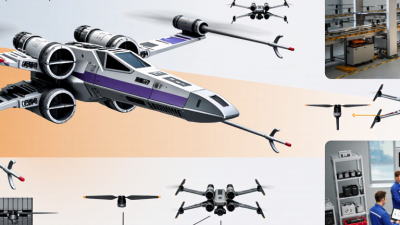
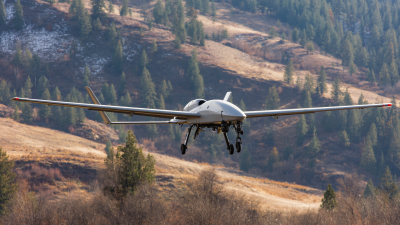
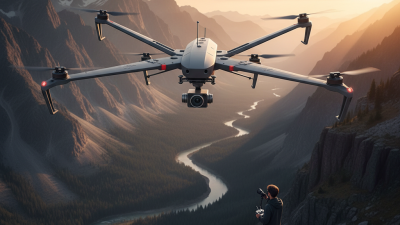
How to Choose the Best X Wing Drone in 2026?
Choosing an X Wing Drone in 2026 means matching its design to the work, not chasing the longest flight-time claim. This configuration can combine efficient forward flight with vertical takeoff and landing, but real performance depends on payload, wind, battery condition, and transition control. Small details matter. A camera-ready model may struggle with mapping equipment, while a long-range aircraft may be awkward to transport or maintain.
Market reports offer useful context, but not a ready-made buying answer. Drone Industry Insights’ Drone Market Report 2024 tracks growth across commercial, consumer, and public-sector applications. The FAA’s 2024–2044 Aerospace Forecast provides another reference for U.S. aviation and unmanned-aircraft trends. Neither report compares every X-wing model directly. Their categories and methods differ, so treat broad market figures as context, not proof that one aircraft is better.
This guide compares practical factors: usable payload, endurance under load, control range, camera or sensor compatibility, spare-part access, and support quality. Look beyond advertised maximums. Ask whether a flight test used the same payload and conditions you expect. Check logs, manuals, and warranty terms before deciding. It is easy to overlook servicing. That can become expensive. The best X Wing Drone is the one that meets your mission reliably, fits your operating budget, and can be flown safely by a trained operator. Some specifications still leave questions; verify them with the manufacturer or a qualified dealer before purchase.
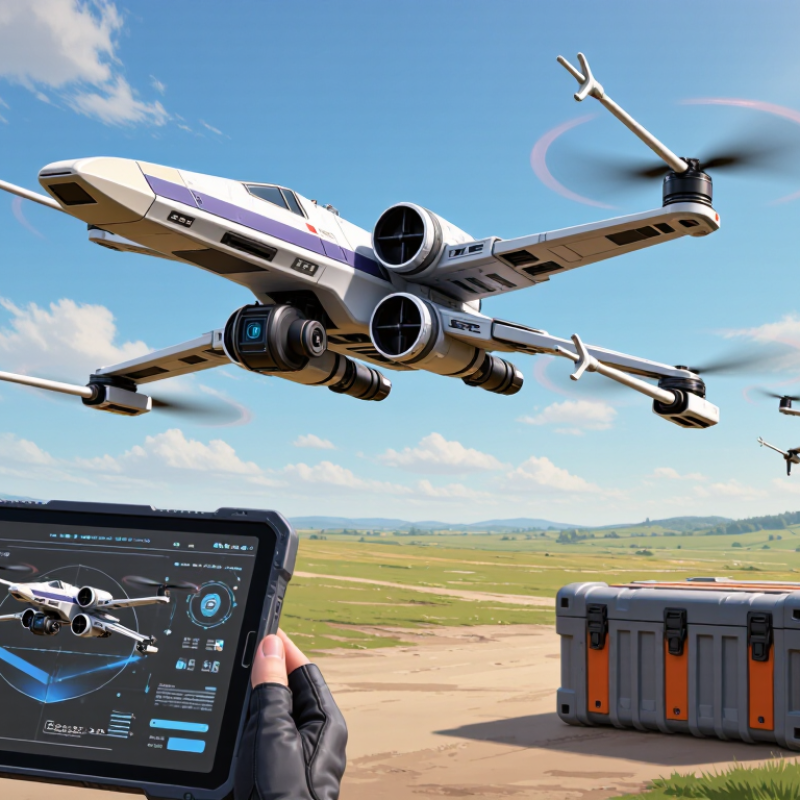
Define the Mission and Compare X-Wing Drone Payload Specifications
Choose an X-wing drone by defining the mission before comparing payload figures. Is it mapping fields, inspecting roofs, or carrying a camera over a long route? Each task changes the useful payload, flight time, and sensor requirements. A heavy thermal camera may fit the aircraft’s stated capacity but reduce endurance. Small detail. Record the payload’s weight, dimensions, power draw, and mounting position.
Compare specifications under the same conditions. Check whether the stated payload includes batteries, cables, and mounts, or only the sensor. Ask for endurance at your expected takeoff weight, not just the empty-aircraft figure. Also check vibration limits, power output, and how payload changes affect balance. A neat specification table can still mislead.
The FAA’s 2024 Aerospace Forecast projects the U.S. commercial small-drone fleet growing from roughly 412,000 aircraft in 2023 to 828,000 by 2028. That forecast describes fleet growth, not X-wing performance, so use it as market context rather than a buying metric. Request a payload test report with flight time, weather, and configuration stated. I would still question any claim that gives a maximum payload without showing its effect on range.
Screen Models Against the FAA’s 250 g Recreational Registration Threshold
When comparing X Wing drones, treat the 250-gram mark as a practical screening point, not a promise of unrestricted flying. Under FAA recreational rules, an aircraft weighing 250 grams or less generally does not need registration. A heavier aircraft does. Check the FAA’s current guidance before flying, since operating category and equipment can change which requirements apply.
Look beyond the advertised weight. Weigh the aircraft as you plan to fly it, with its battery, prop guards, camera, and any other attached parts. A larger battery can push a borderline model over the threshold. Use a small digital scale on a level table; repeat the measurement if the reading sits near 250 grams. Close calls happen.
The number is only one part of the choice. Recreational flyers still need to pass the FAA’s TRUST test and follow applicable airspace and safety rules. If your planned flight requires registration, check whether Remote ID rules apply to that operation. A lighter model may simplify registration, but it does not settle every compliance question. I would compare the complete takeoff weight with the flight features you actually need, rather than relying on a product listing alone.
Check FAA Part 107’s 400 ft AGL Limit and Part 89 Remote ID Rules
When comparing an X-wing drone, check its flight ceiling and Remote ID setup before judging camera quality.
Under FAA Part 107, routine flight is limited to 400 feet above ground level. Near a structure, the rule allows flight up to 400 feet above its uppermost point, subject to applicable conditions. That matters around rooftops, towers, and uneven ground. A screen showing altitude is useful, but it does not replace checking the terrain below.
Remote ID matters, too.
FAA Part 89 generally requires registered drones to broadcast identification and location information, unless an applicable exception—such as operating within an FAA-recognized identification area—applies. Confirm whether the aircraft has Standard Remote ID built in or needs a compliant broadcast module. Check that its status is visible before takeoff. Small detail. Easy to overlook.
The FAA’s Aerospace Forecast, Fiscal Years 2023–2043, projected the commercial small-drone fleet would grow from about 412,000 aircraft in 2022 to 858,000 by 2027. That forecast signals why clear airspace checks and identification features deserve attention when comparing aircraft. I would still verify the current rules and the aircraft’s documentation; product pages can be vague. Choose a model whose altitude display is easy to read outdoors and whose Remote ID operation you can confirm on the ground.
Rank Battery Costs, Repairability, and Warranty Coverage for 2026
For an X-wing-style drone in 2026, rank ownership costs, not just flight time. BloombergNEF’s 2024 Battery Price Survey put average lithium-ion pack prices at $115 per kilowatt-hour, down 20% year over year. That is a market benchmark, not a drone battery’s retail price. Compare replacement battery prices and calculate cost per flight minute. A cheaper aircraft can become expensive when one spare pack costs nearly as much as a repair.
Repairability deserves its own score. The European Commission’s 2022 Eurobarometer found that 77% of Europeans preferred repairing products over replacing them. That figure is not drone-specific, but it highlights why accessible parts matter. Check whether arms, motors, landing gear, and battery connectors can be replaced separately. Ask for parts prices and typical repair times. That matters. A clean spec sheet can mislead; I would lower a model’s score if its repair process is unclear.
Read warranty exclusions before comparing coverage. Separate manufacturing defects from crash damage, water exposure, and battery wear. Record the coverage period, claim process, shipping costs, and whether replacement parts remain available. Give the strongest score to clear terms and practical repair access, not the longest headline warranty. My ranking would still be imperfect: published reports rarely compare drone batteries and repair costs across models.