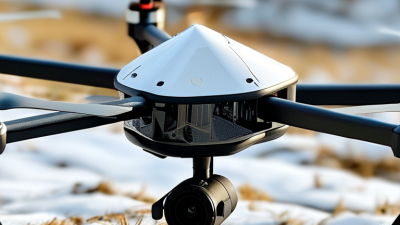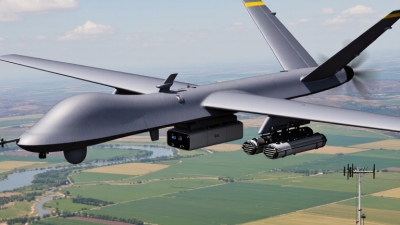
Choosing a reliable Fixed Wing Hybrid Drone supplier requires more than comparing prices and advertised flight times. Global buyers need evidence of real field performance, stable manufacturing, and responsive technical support. A supplier may present impressive specifications, yet practical results can differ under wind, humidity, temperature, and complex terrain.
This guide introduces leading suppliers serving professional and commercial markets worldwide. It considers aircraft endurance, vertical takeoff performance, payload integration, control systems, software compatibility, and maintenance access. Manufacturing experience matters. So does documentation. Buyers should review test records, quality procedures, training options, warranty terms, and regional service coverage before making a decision.
Not every supplier publishes complete information. That gap deserves attention. Some companies excel in airframe design but offer limited after-sales support. Others provide strong training and customization, yet require longer delivery times. These differences can affect survey projects, infrastructure inspection, environmental monitoring, and emergency response planning. The most dependable choice usually balances engineering capability with transparent communication and lawful operating practices. Supplier claims should be checked against independent references, technical demonstrations, and clearly defined acceptance tests. Small details matter, including battery availability, spare propellers, weather limitations, data security, and repair turnaround time. This article aims to help buyers compare those details with greater confidence, while recognizing that every mission has different risks, budgets, and operating conditions. A careful decision may take longer. It can prevent expensive disappointment later.
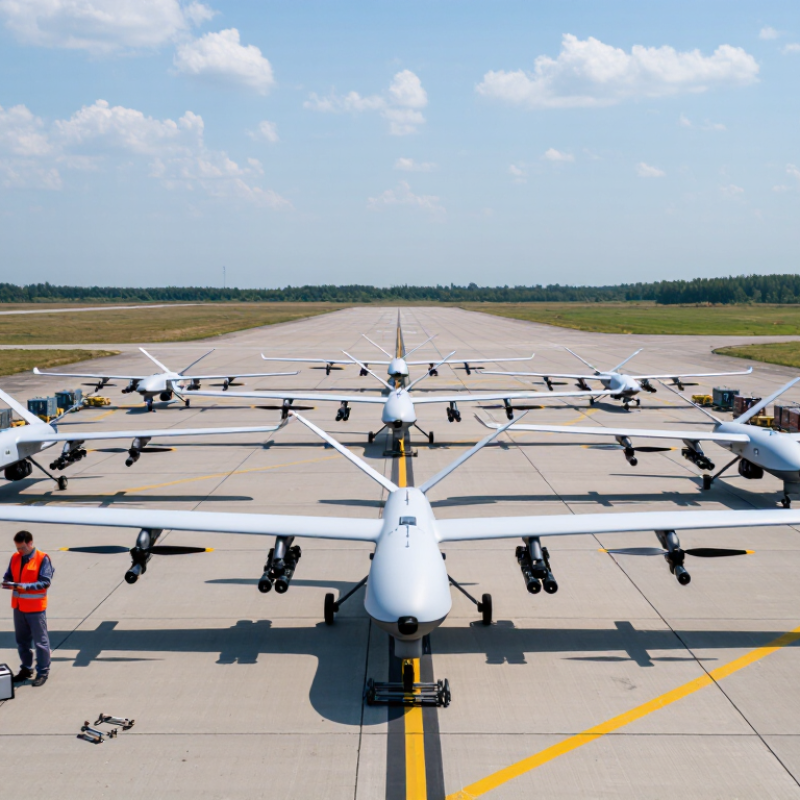
Hybrid fixed-wing drones combine vertical takeoff with efficient forward flight. Lift motors raise the aircraft from a small, uneven field. After reaching a safe height, the flight controller gradually shifts power to the cruise motor. The wings then produce most of the lift, reducing energy use during long missions. This design suits mapping, inspection, and environmental observation where runways are unavailable.
The operating principle depends on a carefully controlled transition. Sensors measure attitude, airspeed, altitude, and motor performance several times each second. The controller adjusts rotor thrust while increasing forward speed. If the aircraft changes modes too quickly, it may lose stability. That risk is easy to underestimate. Experienced operators test transitions under different wind conditions, not only in calm weather. A typical system may cruise at 15 to 25 meters per second, depending on weight and wing design.
Battery capacity must support both vertical flight and the planned return distance. Payloads such as cameras or thermal sensors change the center of gravity, power demand, and stall margin. Buyers should request flight logs, maintenance procedures, spare-part availability, and training support from suppliers. Certification needs also vary between countries and operating areas. A longer flight time does not automatically mean better performance. In practice, strong weather resistance and reliable recovery procedures can matter more than impressive specifications. Some early calculations may still be wrong after field testing. That is why honest performance limits deserve attention.
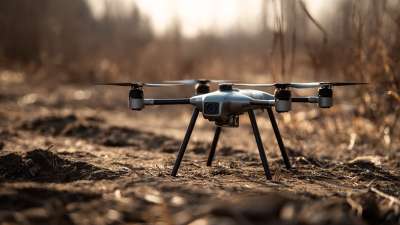
Top Fixed Wing Hybrid Drone Suppliers for Global Buyers
Reliable suppliers combine airframe engineering, vertical takeoff control, and efficient forward flight. Buyers should examine flight logs, not only glossy brochures. A capable supplier can explain endurance changes under wind, payload weight, and temperature. It should also show repeatable transition tests between hover and cruise modes.
Look for documented quality controls across motors, batteries, avionics, and composite structures. Ask how each aircraft is inspected before delivery. Small assembly errors can reduce flight stability. That detail matters. Suppliers should provide maintenance schedules, spare-part availability, pilot training, and responsive technical support. Clear manuals should cover emergency landing procedures, battery storage, software updates, and operating limits. Vague answers deserve caution.
Product evaluation should include a supervised demonstration with realistic payloads. Measure launch height, transition time, cruising speed, landing accuracy, and usable flight endurance. Advertised endurance may exclude wind, reserve power, or sensor weight. That assumption can fail. Buyers should also review navigation reliability, communication range, data security practices, and compatibility with local requirements. Independent test records and customer references add credibility, but they are not perfect proof. A short pilot program can reveal vibration, heat, charging, or workflow problems before a larger purchase. Compare the full ownership cost, including training, batteries, repairs, software services, transport, and compliance documentation.
Key Supplier Capabilities and Product Evaluation Criteria
The chart presents a practical 100-point procurement weighting model for evaluating fixed-wing hybrid drones. Flight endurance, payload capacity, autonomous operation, regulatory readiness, after-sales support, and total cost are emphasized because they directly affect mission performance, deployment risk, and long-term operating value. The scores are evaluation priorities rather than company-specific rankings or market-share data.
Asia-Pacific remains a major production base for fixed-wing hybrid drones. The region combines dense electronics supply chains, carbon-fiber processing, and competitive assembly costs. Fortune Business Insights reported strong Asia-Pacific growth in the commercial drone market through 2032, supported by infrastructure inspection and mapping demand. Supplier audits should examine battery traceability, flight-controller testing, and spare-part availability, not only factory price.
North America offers strong systems engineering, aviation compliance experience, and advanced payload integration. The FAA’s Aerospace Forecast 2024–2044 highlights continuing growth in unmanned aircraft activity and airspace integration needs. This strengthens demand for suppliers with documented safety procedures and reliable telemetry testing. Documentation matters.
European manufacturers often contribute precision engineering, environmental testing, and modular airframe design. The European Union Aviation Safety Agency’s drone regulatory framework has encouraged clearer operational risk assessment. Buyers should request test records for cold-weather starts, rain exposure, and handover between autopilot modes. These details reveal real manufacturing maturity.
The Middle East is developing assembly and logistics capabilities, while parts of Latin America show practical strength in agricultural and surveying applications. Drone Industry Insights’ Drone Market Report 2024 identifies commercial services as a key market driver globally. Still, regional labels can mislead. A supplier may assemble locally while importing critical motors, sensors, or batteries. Experienced buyers should verify origin, quality-control ownership, production capacity, and support response times before signing long-term contracts.
Global buyers need more than endurance claims when selecting fixed wing hybrid drones. Compliance must shape the specification from the beginning. The FAA reported more than 860,000 registered drones and over 330,000 certificated remote pilots in its 2024 UAS data. This scale increases scrutiny around identification, pilot competency, and operational records.
Suppliers should provide registration guidance, Remote ID compatibility, radio-frequency documentation, and maintenance procedures. European deployments may require a risk assessment under EASA’s Specific Operations Risk Assessment framework. Buyers should also verify insurance, import paperwork, data protection controls, and local airspace approvals.
Check the paperwork.
A compliant airframe still needs reliable command links, controlled vertical takeoff, and safe recovery procedures.
The ICAO Manual on Remotely Piloted Aircraft Systems highlights command-and-control performance, detect-and-avoid planning, and operational authorization. These requirements affect payload limits, battery reserves, weather thresholds, and route design. A 2024 industry analysis by Drone Industry Insights reported continued growth in commercial drone demand, but market forecasts can hide deployment costs.
That is a useful warning. Buyers should request flight logs, transition-test results, cybersecurity practices, and component traceability. A supplier’s laboratory demonstration may not reflect dusty sites, crosswinds, or weak cellular coverage.
Test it locally.
Top Fixed Wing Hybrid Drone Suppliers for Global Buyers
Procurement, Customization, Support, and Delivery Considerations
Global buyers should compare fixed wing hybrid drone suppliers beyond advertised flight time. MarketsandMarkets valued the global drone market at USD 27.4 billion in 2021 and projected USD 58.4 billion by 2026. This growth increases supplier choices, but also complicates due diligence. Request flight logs, payload specifications, battery-cycle data, and documented acceptance tests. A short demonstration is not enough.
Customization should match the mission, not merely the sales brochure. Buyers may need thermal cameras, multispectral sensors, encrypted data links, or rugged landing gear. Ask whether modifications affect endurance, balance, or maintenance intervals. Support matters equally. Confirm pilot training, software updates, spare-parts availability, and response times for remote troubleshooting. A supplier that promises everything may deliver nothing well.
Delivery planning needs practical detail. Check production capacity, packaging standards, export documentation, destination requirements, and replacement procedures. Drone Industry Insights’ 2024 industry reporting identifies mapping, inspection, and surveying as major commercial applications, where dependable data quality often matters more than maximum range. Include factory acceptance testing and a small pilot shipment before a large order. I would not treat a polished demo as proof. Weather testing is often overlooked. A strong contract should define measurable performance, service limits, and remedies when delivery slips.
| Supplier Capability Profile | Typical Aircraft Class | Typical Endurance | Typical Payload Capacity | Launch and Recovery Method | Customization Scope | Support Model | Indicative Delivery Window | Key Procurement Considerations |
|---|---|---|---|---|---|---|---|---|
| Entry-Level Commercial OEM | Electric vertical-takeoff-and-landing fixed-wing aircraft for mapping, inspection, and surveying | 60–120 minutes, depending on battery, payload, wind, and flight profile | 0.5–2 kg | VTOL; no runway normally required | Payload mounting, camera integration, radio frequency selection, ground-control software settings, and localized documentation | Remote technical support, operator training, spare-parts packages, and firmware assistance | 8–16 weeks for standard configurations; longer for customized payloads | Confirm battery transport documentation, operating temperature range, payload balance limits, and local flight permissions |
| Professional Surveying Supplier | Medium fixed-wing VTOL platform designed for photogrammetry, LiDAR, corridor mapping, and agricultural surveys | 2–5 hours under payload-dependent operating conditions | 1–5 kg | VTOL or catapult launch with deep-stall or belly recovery | High-resolution imaging, LiDAR integration, multispectral sensors, RTK/PPK positioning, and mission-planning integration | On-site commissioning options, application training, preventive-maintenance guidance, and annual support contracts | 12–24 weeks, subject to sensor availability and acceptance testing | Request measured accuracy data, georeferencing workflow details, calibration procedures, and sample survey outputs |
| Long-Endurance Electric Supplier | Lightweight fixed-wing VTOL aircraft optimized for extended observation and environmental monitoring | 4–8 hours, with endurance strongly affected by payload and weather | 1–3 kg | VTOL with automated recovery | Electro-optical and infrared payloads, larger battery systems, telemetry links, and autonomous mission functions | Online support, maintenance manuals, pilot training, mission review, and replacement airframe modules | 16–28 weeks for non-standard endurance or payload requirements | Evaluate battery cycle life, reserve-energy policy, lost-link behavior, wind limits, and recovery reliability |
| Hybrid-Electric Powertrain Supplier | Medium-to-large hybrid-electric aircraft using an engine-generator system with electric propulsion | 6–12 hours, depending on fuel load, aircraft mass, and payload | 3–15 kg | VTOL, catapult, or assisted launch depending on configuration | Power-system sizing, fuel-tank configuration, payload bay design, thermal management, and redundant communications | Factory acceptance testing, field service options, engine maintenance training, and fleet-management support | 6–12 months for a new configuration; shorter for stocked airframes | Check fuel type, engine service intervals, noise limits, emissions requirements, spare-engine availability, and operator qualifications |
| Heavy-Payload Industrial Supplier | Large fixed-wing VTOL platform for utility inspection, logistics trials, emergency response, and multi-sensor operations | 4–10 hours, depending on payload and operating altitude | 10–40 kg | VTOL or prepared-surface launch and recovery | Modular payload bays, stabilized gimbals, communications relays, cargo modules, redundant flight controls, and mission-specific software | Formal training programs, regional service partners, documented maintenance schedules, and service-level agreements | 9–18 months, including engineering, production, integration, and flight acceptance | Verify structural margins, center-of-gravity limits, certification pathway, ground-support equipment, and recovery-zone requirements |
| Defense and Public-Safety Integrator | Ruggedized fixed-wing VTOL system for border observation, disaster assessment, search and rescue, and secure communications | 8–20 hours for selected large platforms; actual endurance depends on configuration | 5–25 kg | VTOL, runway, or field-launch system | Secure data links, encrypted control channels, beyond-visual-line-of-sight equipment, thermal sensors, radar, and mission-system integration | Operator and maintainer certification, deployment support, spares provisioning, cybersecurity updates, and documentation control | 12–24 months when regulatory approval, secure equipment, or government acceptance is required | Assess export controls, cybersecurity architecture, data ownership, supply-chain security, and end-user documentation requirements |
| Contract Manufacturer and Private-Label Partner | Buyer-defined fixed-wing VTOL platform based on an existing airframe or new design | 1–12 hours, depending on the selected airframe and power system | 1–20 kg | Configured to match the buyer’s operating concept | Extensive mechanical, electrical, software, branding, packaging, documentation, and production-line customization | Engineering change management, production quality control, tooling support, documentation transfer, and long-term manufacturing support | 4–12 months for a repeatable production program; prototype programs may take longer | Define intellectual-property ownership, tooling ownership, minimum order quantity, quality standards, inspection rights, and change-control procedures |
| Regional Distributor and Service Provider | Locally supported fixed-wing VTOL systems sourced from an established international manufacturer | 1–10 hours, depending on the selected aircraft | 1–15 kg | Usually VTOL; local operating conditions apply | Payload selection, local communications equipment, software configuration, training language, and local compliance documentation | Local demonstrations, first-line maintenance, spare-parts storage, pilot training, and warranty coordination | 2–12 weeks for regional inventory; 3–9 months for factory-order configurations | Confirm distributor authorization, warranty responsibility, local spare-parts stock, response times, and availability of trained technicians |