Top 10 Types of Delta Wing Drones for Buyers
A Delta Wing Drone can look deceptively simple: a swept, triangular wing, a compact fuselage, and few visible moving parts. Yet choosing one involves more than comparing photographs or advertised flight times. Buyers need to match the aircraft to practical needs, such as mapping fields, inspecting infrastructure, conducting research, or covering large areas efficiently. Payload capacity, launch method, landing space, endurance, and operating support all shape that decision.
Theodore von Kármán, an influential aeronautical engineer, is often credited with the observation: “Scientists study the world as it is; engineers create the world that has never been.” That engineering mindset helps explain why delta-wing designs vary so widely. Some prioritize endurance, while others favor compact transport, rapid deployment, or specialized sensors. A model that performs well in calm open terrain may prove less suitable when wind, rough ground, or limited recovery space enters the picture. Details matter.
This guide explores ten types of delta-wing drones buyers may encounter, from entry-level platforms to purpose-built professional aircraft. Each type brings trade-offs in cost, complexity, and mission fit. The categories are useful, but they are not perfect; real products often blur their boundaries. Look beyond the label. Compare documented specifications, support options, and test conditions, then consider where and how the aircraft will actually fly.
What Defines a Delta Wing Drone
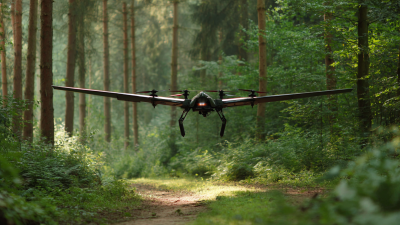
A delta wing drone is defined by its triangular, swept wing, not by its size or camera. The wing usually has no separate tail. Elevons—moving surfaces at the rear—combine pitch and roll control. This compact layout can reduce parts and provide room for batteries or sensors inside the wing. The shape is easy to spot. Look for a broad leading edge and a pointed nose.
That geometry changes how the aircraft flies. The swept wing can help maintain lift at higher angles of attack, but low-speed handling and launch technique still matter. A buyer should check the stated stall speed, takeoff method, payload limit, and recovery procedure. A 2024 FAA Aerospace Forecast projected the U.S. commercial small-drone fleet could approach 955,000 aircraft by 2027. That figure covers many designs, not delta wings specifically; it signals a growing field where matching airframe to mission matters.
For inspection routes, a delta wing can suit long, steady flights over open ground. Its broad planform may also make transport less convenient than a folding multirotor. Check the wing’s material, control-surface linkage, and repair access; a cracked leading edge can spoil a flight. One detail gets missed: “tailless” does not mean maintenance-free. I would not choose by silhouette alone. FAA forecast: Aerospace Forecast, Fiscal Years 2024–2044.
How Delta Wing Designs Differ in Shape and Flight
Top 10 Types of Delta Wing Drones for Buyers
How Delta Wing Designs Differ in Shape and Flight
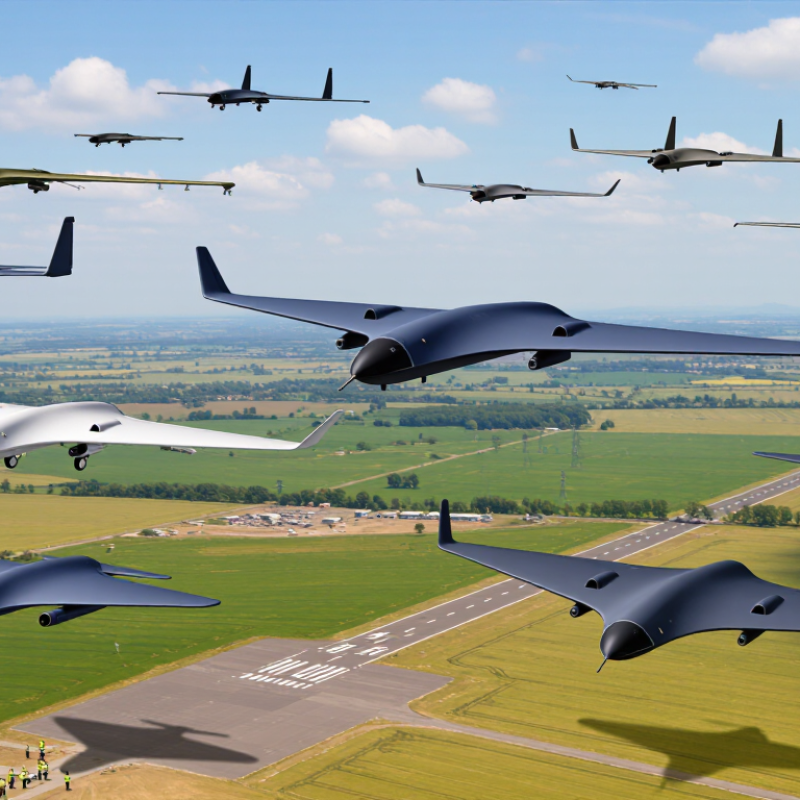
Delta wings vary in sweep, span, and tip shape. A narrow, sharply swept wing cuts drag at speed but often needs more room to turn. A broader delta can feel steadier at low speed, though it may trade some efficiency for control. Clipped tips reduce span, while rounded or extended tips change how lift spreads across the wing. Small changes matter. NASA aerodynamic research describes vortex lift: airflow spirals over a swept delta wing at higher angles of attack, helping it maintain lift. That benefit depends on the design and flight conditions; it is not a guarantee of easy handling.
For buyers, compare more than the outline. A long, slender planform may suit efficient cruising, while a compact wing can be easier to transport and launch. High sweep can also mean more demanding low-speed handling. The FAA’s Aerospace Forecast, FY 2024–2044, projected the U.S. commercial small-drone fleet would grow from about 1.18 million in 2023 to 1.48 million in 2028. That is useful market context, not proof that one wing shape is best. Real payload, wind, and landing conditions can expose weaknesses a spec sheet misses.
Tips: Check wing area, sweep angle, payload range, and stall behavior in the manufacturer’s flight data. Ask how the aircraft lands on uneven ground. A sleek shape can look convincing. It may still be a poor fit for your site.
Top 10 Delta Wing Drone Types: Example Aspect Ratios
How planform shape can differ—and what its geometry suggests about flight.
Aspect ratio is calculated as wingspan squared divided by wing area (b²/S). The values use explicitly defined example dimensions for comparing planforms; they are not measured specifications for production drones. Lower ratios describe broader wings, while higher ratios describe more slender wings. Flight performance also depends on sweep, airfoil, mass, speed, and other design factors.
Ten Types of Delta Wing Drones Buyers Should Know
Delta-wing drones suit buyers who need efficient forward flight, compact storage, or stable mapping runs. The ten buyer-facing types are compact hand-launch, tactical reconnaissance, long-endurance, aerial mapping, agricultural monitoring, coastal observation, high-altitude research, battery-electric, combustion-powered, and vertical-takeoff-assisted models. These categories overlap: a mapping aircraft may also be electric and hand-launched. Treat them as purchasing profiles, not a fixed industry standard.
Compact hand-launch models fit quick field deployments; check wind limits and recovery space. Tactical and long-endurance types prioritize payload capacity and flight time, while mapping models need stable cameras and repeatable routes. Agricultural versions carry sensors for crop assessment, not every model supports spraying.
Coastal and high-altitude aircraft need suitable weather protection, communications, and mission planning. Battery-electric designs can be quieter, but their range depends heavily on payload and temperature. Combustion-powered designs may stay airborne longer, with added maintenance. VTOL-assisted designs lift vertically, then transition to efficient wing-borne flight. Test carefully.
For market context, Grand View Research’s 2024 drone-market report valued the global market at US$73.06 billion. That figure covers drones broadly, not delta-wing aircraft alone. Buyers should compare verified endurance, payload, launch method, and landing needs under realistic conditions. A brochure’s best-case range is not a field guarantee.
Key Features to Compare Before Buying
When comparing delta wing drones, start with the job, not the advertised flight time. A compact hand-launched model suits quick site checks, while a larger mapping platform may carry heavier cameras. Check payload limits and balance together; a camera that fits physically can still affect stability. Numbers need context. Ask whether endurance figures include useful payload, calm air, and reserve power. Wind resistance matters too, especially over open fields where gusts can change quickly.
Inspect the practical details. Does the aircraft launch by hand, from a rail, or with assistance? Is landing possible on the ground you actually have? A belly landing on rough gravel can wear the airframe faster than expected. Compare battery replacement time, charging requirements, and the availability of common repair parts. Small details matter. Review the control link’s stated range, but also check what happens if signal or navigation data is lost. Clear return, holding, and landing behavior is more useful than a long specification list. Finally, examine camera mounting, flight-planning tools, and training needs. A polished demo can hide a steep learning curve; that part is easy to underestimate.
How to Choose a Delta Wing Drone for Your Needs
Choosing a delta-wing drone starts with its intended job, not its advertised range.
For mapping fields, prioritize stable flight, suitable camera resolution, and repeatable coverage. For training or inspection, simple controls and accessible replacement parts may matter. Compact wings are easier to transport. They may also carry less equipment and handle gusts poorly.
Check endurance under realistic conditions, not just a best-case figure.
Wind, cold, battery age, and payload all reduce flight time. Ask how the aircraft launches and lands, and whether you have enough recovery space. A smooth field is not always available. Compare setup time, total system weight, and charging needs alongside flight time. A heavier camera can affect balance, so check the payload limit and center-of-gravity guidance in the manual. Published range is a clue, not a promise.
Consider the complete workflow before purchasing.
Check whether flight planning software fits your mapping process, and ask how images are stored and exported. Review maintenance intervals, training options, and the availability of batteries and parts. If possible, request a supervised demonstration in conditions similar to your own. Notice how long setup takes. A capable aircraft can still be a poor fit if launch, recovery, or data handling feels awkward. That part is easy to underestimate.