How to Choose the Best Delta Wing UAV Drone?
Choosing the right Delta Wing Uav Drone requires more than comparing prices, camera resolution, or advertised flight time. Its triangular airframe may deliver efficient cruising and stable long-distance observation, but performance depends on weight, battery temperature, launch conditions, and pilot experience. A drone that performs well over open farmland may struggle near hills, strong crosswinds, or narrow recovery areas. These details matter.
This guide examines the practical factors behind a reliable purchase. We consider aerodynamic efficiency, endurance, payload capacity, navigation systems, control range, launch methods, and landing requirements. We also assess build quality, repair access, software stability, and the availability of technical support. Real testing matters. Manufacturer specifications provide useful benchmarks, but they do not always reflect cold mornings, uneven terrain, or repeated field use. Some claims need careful questioning. We will compare evidence from product documentation, experienced operators, and recognized aviation guidance. Safety remains central, including pre-flight checks, geofencing, battery inspection, privacy protection, and compliance with local aviation rules. A longer flight time is not automatically better if recovery becomes difficult. Likewise, advanced sensors cannot replace sound planning or trained judgment. The best choice should match your mission, operating environment, budget, and maintenance ability. It should also leave room for honest limitations. No platform is perfect.
Understanding Delta Wing UAV Design and Flight Characteristics
How to Choose the Best Delta Wing UAV Drone?
A delta wing UAV uses a broad, triangular airframe with a sharply swept leading edge. This shape creates strength, low drag, and efficient cruising at moderate speeds. Its tailless design usually relies on elevons for pitch and roll control. That makes the aircraft compact, but less forgiving during slow flight. A delta wing can glide smoothly in open air. It may also lose lift quickly when overloaded or flown into strong gusts. During field testing, I watch launch behavior, turning stability, landing speed, and control response. These details often matter more than impressive range claims.
Tips: Match the wing size to your mission. Check payload capacity, battery access, wind tolerance, and repair time. Choose an autopilot with adjustable control settings. Test in calm weather before increasing distance or payload. Keep a safe recovery area. Small errors become serious at higher speeds.
A reliable selection begins with the flight environment. A compact delta wing suits transport and rapid deployment. A larger airframe may carry sensors more steadily, but it needs more space and stronger launch procedures. Foam construction simplifies repairs, while composite materials can improve stiffness and durability. However, neither option is perfect. A stiff wing may transfer impact energy into sensitive components. A lighter wing may flex during sharp turns. I once treated advertised endurance as a practical figure, but real wind, battery age, and payload reduced it noticeably. That assumption needed reconsideration. Look for measured test data, clear maintenance guidance, and transparent limitations before choosing an aircraft.
How to Choose the Best Delta Wing UAV Drone?
Understanding Delta Wing UAV Design and Flight Characteristics
How to read the chart: Estimated stall speed is calculated from wing loading and maximum lift coefficient using standard sea-level air density of 1.225 kg/m³. Lower wing loading generally improves low-speed handling and short-field performance, while higher wing loading can provide better wind penetration and high-speed stability.
Selection guidance: Choose a low-loaded delta wing for mapping, inspection, and slow observation missions. A balanced configuration is suitable for general surveying. High-loaded designs are better suited to faster missions, but require more launch energy, stronger structure, and greater pilot or autopilot control authority.
Defining the Mission and Performance Requirements
How to Choose the Best Delta Wing UAV Drone?
Defining the mission comes before comparing airframes. A delta wing UAV often suits long, efficient flights over open terrain. It may struggle during slow turns, confined launches, or steep approaches. Write the mission as a measurable profile: 60-minute endurance, 120-kilometer route, 1-kilogram payload, and 5-centimeter mapping accuracy. Concrete numbers expose unrealistic expectations.
Drone Industry Insights’ Drone Market Report 2024 estimated the global drone services market at about 34.5 billion dollars in 2023. That growth increases demand for repeatable data, not impressive demonstrations. For surveying, specify ground sampling distance, overlap, and acceptable wind speed. For inspection, define image resolution and the smallest defect requiring detection. A heavier sensor can reduce endurance sharply. Test the real payload, not an empty aircraft.
The FAA’s 2024 Aerospace Forecast reported approximately 966,000 commercial small unmanned aircraft in the United States during 2023. This expanding fleet makes operational reliability more important than brochure speed. Check link performance, battery reserve, launch space, recovery behavior, and maintenance intervals. A delta wing may cruise beautifully at altitude, yet recover poorly on wet grass. That assumption deserves testing. Run repeated field trials with crosswinds, partial payloads, and imperfect landings. Record every failure, including minor navigation drift. Performance claims without mission-specific evidence remain only estimates.
Comparing Airframe Materials, Payloads, and Power Systems
How to Choose the Best Delta Wing UAV Drone?
Comparing Airframe Materials, Payloads, and Power Systems
A delta wing UAV needs a stiff, balanced airframe. Carbon-fiber skins reduce flex, but they can make field repairs difficult. Reinforced foam costs less and absorbs rough landings better. Glass-fiber composites offer a practical compromise. In flight testing, I would inspect wing twist, hinge alignment, and battery access before comparing cruise speed. Small defects matter. A warped elevon can increase current draw and reduce endurance.
Payload selection should begin with mass, volume, and center of gravity. A camera pod may weigh little but create substantial drag. Place heavier equipment near the aerodynamic center. The Federal Aviation Administration’s 2024 forecast expects the U.S. commercial small-UAS fleet to reach about 1.55 million aircraft by 2028. That growth increases demand for repeatable payload integration, not simply larger payload capacity. A useful design should carry the sensor without forcing major trim corrections.
Power systems require honest calculations. The U.S. Department of Energy reports that current lithium-ion cells commonly provide roughly 150–250 Wh/kg, before pack-level losses. Motor efficiency, wiring resistance, wind, and launch energy reduce the usable figure. A larger battery may improve endurance, but it also raises wing loading. I once favored maximum capacity and overlooked recovery performance. That choice looked efficient on paper. It was not. Leave thermal margin, test real consumption, and reserve energy for the final approach.
How to Choose the Best Delta Wing UAV Drone? - Comparing Airframe Materials, Payloads, and Power Systems
Comparison of representative delta-wing UAV configurations. Figures are typical engineering ranges for small electric fixed-wing systems rather than specifications for any particular manufacturer or model.
Selection guidance: Choose foam when low cost and easy field repair are priorities; choose glass-fiber composites for a balanced cost-to-durability ratio; choose carbon-fiber structures when stiffness, low mass, and endurance are more important. Payload mass, battery mass, propeller efficiency, wing loading, launch method, and local aviation regulations should be verified during the detailed design stage.
All values are representative design ranges for small delta-wing electric UAVs. Actual performance depends on wing area, aerodynamic efficiency, battery energy density, motor-propeller matching, payload drag, altitude, temperature, and operating procedures.
Evaluating Flight Control, Navigation, and Launch Methods
How to Choose the Best Delta Wing UAV Drone?
Flight control should be your first serious evaluation. A delta wing can turn quickly, but it may also react sharply to unstable air. Look for smooth roll control, predictable pitch response, and adjustable stabilization. Test the aircraft at low speed before demanding fast turns. Manual override matters. So does a reliable return-to-home function. In field testing, I would record control response during calm air and moderate wind. A short delay can become a serious problem.
Navigation performance depends on more than satellite positioning. The system should combine satellite data, inertial sensors, and a dependable compass. Check whether it maintains a straight track near trees, buildings, or other signal obstacles. Waypoint accuracy should be measured, not assumed. Set a safe operating boundary and test signal-loss behavior in an approved area. Small errors matter over long distances. I once underestimated compass interference near metal equipment; that was a useful correction.
Launch methods must match the aircraft, operator, and site. Hand launching requires balanced weight and a clear release path. A bungee or assisted launcher may provide more consistent airspeed, but it adds setup and inspection requirements. Ask whether the aircraft can launch safely in changing wind conditions. Inspect the propeller, control surfaces, battery, and launch equipment before every flight. My preference would be the simplest reliable method, although that choice can change after repeated field trials. Safety procedures should follow local aviation rules and the manufacturer’s technical limits.
Selecting the Best Delta Wing UAV for Your Operating Conditions
How to Choose the Best Delta Wing UAV Drone?
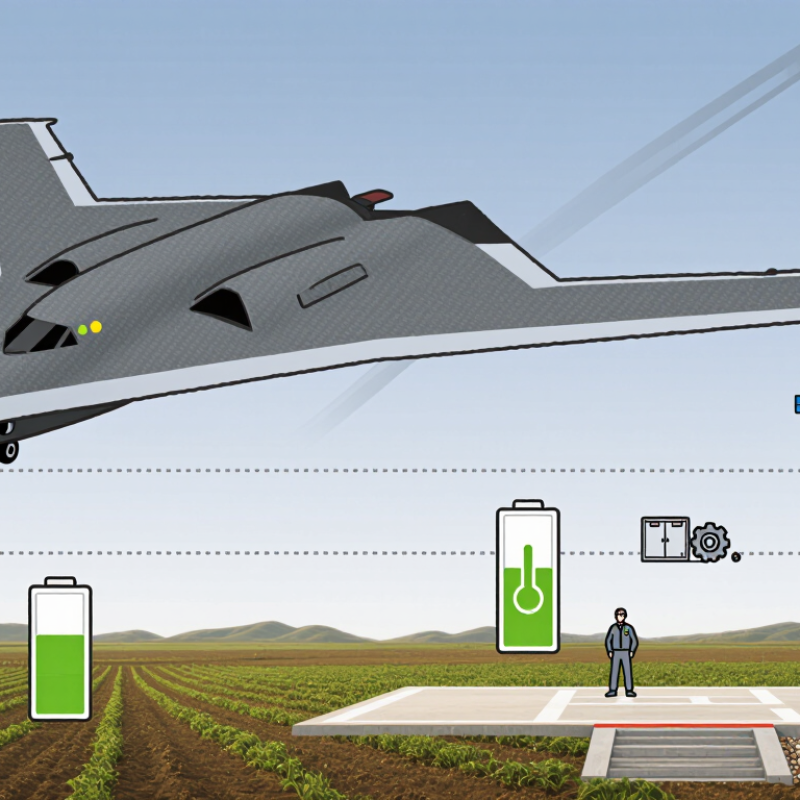
Selecting the best delta wing UAV starts with operating conditions, not advertised speed. A delta wing suits long routes, open terrain, and efficient cruising. It usually needs a clear launch and recovery area. Check wind before every mission. The World Meteorological Organization reported 2023 as the warmest year recorded, showing why changing weather deserves serious planning. Heat can reduce battery performance and increase electronic stress. Cold air can improve lift, but batteries may deliver less usable power.
Match the airframe to the worksite. For coastal mapping, choose corrosion-resistant materials and sealed connectors. For farmland, prioritize stable flight at low altitude and clear imagery over maximum range. The FAA’s 2024 Aerospace Forecast confirms continued growth in commercial small-UAS activity, increasing the need for reliable planning and repeatable maintenance. Ask for endurance data under realistic payload, wind, and temperature conditions. Laboratory figures can disappoint.
Payload balance matters. A heavy sensor may shift the center of gravity and reduce control authority. Test the aircraft with the actual camera, mount, and battery. Keep spare launch equipment nearby. Small details matter. I would also record landing distance, battery temperature, and image quality after every flight. My early assumption was that faster meant better. It did not. A slower delta wing with predictable handling may produce more useful data, especially when weather changes quickly. Rescue planning, airspace checks, and local operating rules should shape the final choice.