Top 10 Unmanned Aircraft For Civilian Use in 2023: What You Need to Know
In recent years, the advancement of technology has ignited a revolution in the field of unmanned aircraft, transforming them from military assets to invaluable tools for civilian applications. As we step into 2023, the growing versatility and accessibility of Unmanned Aircraft have spurred an increasing interest among businesses and hobbyists alike. From aerial surveys to agricultural monitoring, these innovative machines offer a range of solutions that can enhance efficiency and accuracy in various sectors.
The fascination with Unmanned Aircraft extends beyond just their operational capabilities; it encompasses their potential to redefine industries, including construction, photography, and delivery services. As drone technology continues to evolve, understanding the landscape of available models and their specific uses becomes crucial for anyone looking to leverage the benefits of unmanned systems. In this guide, we will explore the top 10 unmanned aircraft suited for civilian use in 2023, providing insights into their features and applications. Whether you are a budding enthusiast or a seasoned professional, this overview will equip you with the essential knowledge to navigate the exciting world of unmanned aviation.
Overview of Civilian Unmanned Aircraft Technologies in 2023
In 2023, civilian unmanned aircraft technologies have evolved significantly, accommodating various industries from
agriculture to filmmaking.
These advancements not only improve efficiency but also enhance safety and accessibility. The integration of
artificial intelligence and
advanced sensors enables drones to perform complex tasks autonomously, such as
precision farming and aerial inspections, thus transforming traditional workflows.
Tips: When considering a civilian unmanned aircraft, first identify the specific needs of your project.
Assess factors like payload capacity,
flight time, and environmental conditions to ensure the chosen
aircraft meets your requirements.
Moreover, regulatory frameworks have become more refined, providing clearer guidelines for civilian drone operations.
This has fostered a safer operating environment, encouraging wider adoption of drone technologies.
Public awareness about drone usage and its benefits has also increased, helping mitigate concerns associated
with privacy and safety.
Tips: Stay updated on local regulations regarding drone flight and operation. Engaging with community
resources can help you navigate legal restrictions and find training opportunities to better understand
unmanned aircraft capabilities.
Key Applications of Unmanned Aircraft in Various Industries
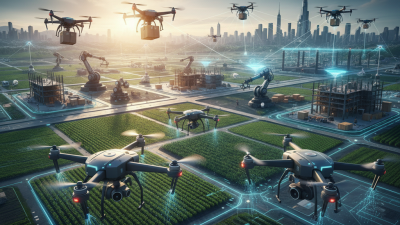
Unmanned aircraft, commonly known as drones, have found a myriad of applications across various industries, reshaping operational efficiencies and transforming traditional practices. In agriculture, for instance, unmanned aircraft are leveraged for precision farming techniques. They can monitor crop health through aerial imaging, assess soil conditions, and even assist in planting, thereby enhancing productivity and reducing resource wastage. This technology enables farmers to make informed decisions that lead to sustainable agricultural practices.
In construction and infrastructure, unmanned aircraft provide invaluable support through surveying and mapping. By capturing high-resolution aerial imagery, these aircraft facilitate progress tracking, site management, and risk assessment. They help in identifying potential safety hazards and can be employed to evaluate structural integrity without the need for intrusive methods.
Furthermore, the incorporation of drones in delivery services represents a significant leap toward efficient logistics and supply chain management, particularly in remote or hard-to-reach areas. Through these diverse applications, unmanned aircraft are not only improving operational capabilities but also driving innovation across multiple sectors.
Top 10 Unmanned Aircraft Models for Civilian Use
In 2023, the market for unmanned aircraft intended for civilian use has expanded significantly, offering various models that cater to diverse needs. These aircraft are increasingly utilized in sectors such as agriculture, infrastructure monitoring, search and rescue operations, and environmental research. Many models emphasize enhanced flight stability, user-friendly interfaces, and advanced sensor technology, allowing operators to collect high-quality data and imagery efficiently.
Among the top unmanned aircraft, several models stand out due to their versatility and innovation. Some designs feature features like obstacle avoidance systems and long-range capabilities, ideal for surveying large areas or conducting assessments in challenging terrains. Others prioritize compact designs for easy transport and operation in urban environments. As the technology behind unmanned aircraft continues to evolve, it's expected that future models will incorporate even more sophisticated features, such as automated flight planning and artificial intelligence-assisted navigation, further broadening their application in civilian sectors.
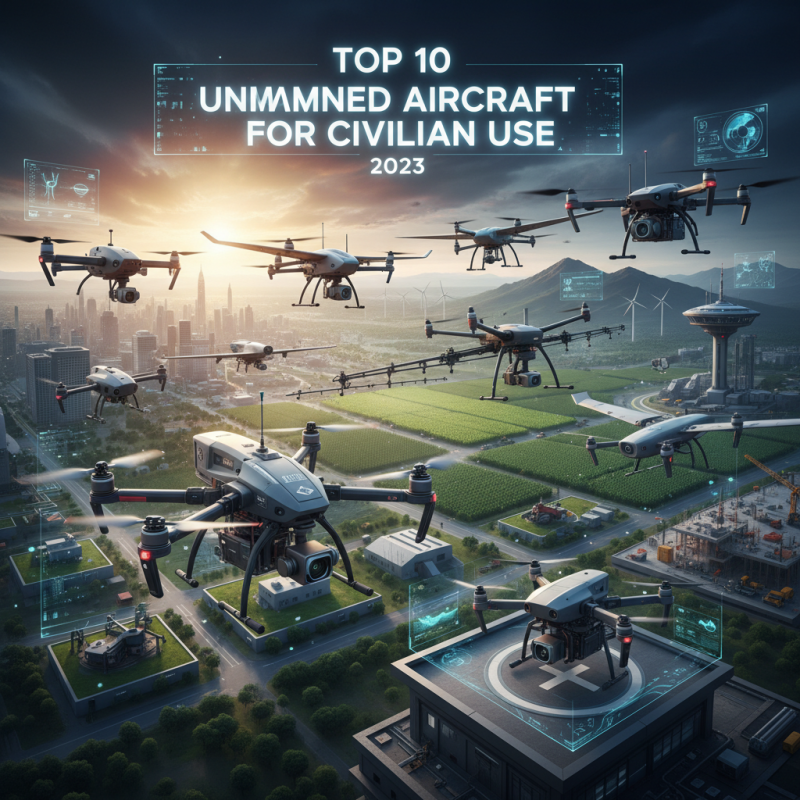
Top 10 Unmanned Aircraft For Civilian Use in 2023: What You Need to Know
| Model |
Max Flight Time |
Range |
Payload Capacity |
Features |
| Aircraft Model A |
30 minutes |
5 km |
2 kg |
HD Camera, GPS |
| Aircraft Model B |
25 minutes |
4 km |
1.5 kg |
Thermal Imaging |
| Aircraft Model C |
40 minutes |
10 km |
3 kg |
Autonomous Navigation |
| Aircraft Model D |
50 minutes |
15 km |
5 kg |
Real-time Video |
| Aircraft Model E |
35 minutes |
6 km |
2.5 kg |
Mapping Software |
| Aircraft Model F |
45 minutes |
12 km |
4 kg |
Obstacle Avoidance |
| Aircraft Model G |
30 minutes |
3 km |
1 kg |
Easy to Operate |
| Aircraft Model H |
60 minutes |
18 km |
6 kg |
Fuel-efficient |
| Aircraft Model I |
20 minutes |
2 km |
0.5 kg |
Compact Design |
| Aircraft Model J |
55 minutes |
16 km |
5.5 kg |
AI Assistance |
Factors Influencing the Selection of Unmanned Aircraft
The selection of unmanned aircraft for civilian use in 2023 is influenced by a variety of factors, with technology and regulatory landscape topping the list. As reported by the Federal Aviation Administration (FAA), the number of registered drones in the U.S. alone reached over 1.7 million by the end of 2022, reinforcing the demand for sophisticated and reliable systems. This significant market growth is driven by advancements in autonomous flight technology, longer battery life, and the integration of AI algorithms that enhance navigation and obstacle avoidance capabilities. Civilian applications range from agricultural monitoring to infrastructure inspection, emphasizing the versatility of these unmanned systems in improving efficiency and safety across numerous sectors.
Furthermore, the regulatory environment plays a crucial role in shaping the choice of unmanned aircraft. With the implementation of new FAA regulations and the ongoing development of remote identification requirements, operators are increasingly focusing on compliance alongside performance. According to a report from the Commercial Drone Alliance, 64% of industry stakeholders identified regulatory clarity as a key driver in their purchasing decisions. The ability to adapt to these evolving regulations not only ensures operational safety but also enables broader acceptance and growth within the civilian market. Consequently, manufacturers must prioritize regulatory compliance as they innovate and refine their unmanned aircraft models to meet the diverse needs of operators across different industries.
Future Trends in Civilian Unmanned Aircraft Development
The development of civilian unmanned aircraft has seen significant advancements in recent years, driven by technological innovations and a growing demand for diverse applications. According to a report by ResearchAndMarkets, the global drone market is expected to reach USD 42.8 billion by 2025, with civilian applications including aerial photography, agriculture, and infrastructure inspection. This rapid growth reflects the increasing acceptance of unmanned aircraft systems (UAS) as essential tools in various sectors, paving the way for future advancements in design and functionality.
Future trends indicate a shift towards more autonomous and intelligent unmanned aircraft, featuring enhanced sensor technologies and artificial intelligence integration. The Federal Aviation Administration (FAA) projects that by 2025, the number of registered drones in the U.S. could exceed 1.5 million, further reinforcing the industry's trajectory. Partnership efforts between tech companies and regulatory bodies are crucial to developing UAS technologies that comply with safety and operational standards, ensuring a sustainable growth path for the industry. As these technologies evolve, civilian applications will become more sophisticated, enabling tasks that were once considered impractical, thus unlocking new economic opportunities and enhancing operational efficiency across various fields.