2026 How to Choose the Best Long Range Drone for Your Needs?
As drone technology advances, the demand for long range drones is on the rise. Industry reports indicate that the global drone market is expected to reach $42.8 billion by 2026. This growth is driven by diverse applications in agriculture, search and rescue, and surveillance. Choosing the best long range drone can be challenging, given the variety of options available.
Many users prioritize flight time and range. A long range drone typically offers a flight distance exceeding 5 miles. This feature is crucial for agricultural surveys or industrial inspections. However, potential buyers must also consider payload capacity and camera quality. A drone's versatility can be hindered by its limitations. Each user's needs are different, making a one-size-fits-all approach ineffective.
It is essential to evaluate reliable reviews and expert analyses before making a decision. Manufacturer specifications alone may not provide a complete picture. Real-world performance often reveals flaws in advertised capabilities. Personal experiences and trusted sources of information can greatly influence your choice. Balancing specific needs with technological advancements will help you select the best option.
Understanding Long Range Drones: Features and Specifications
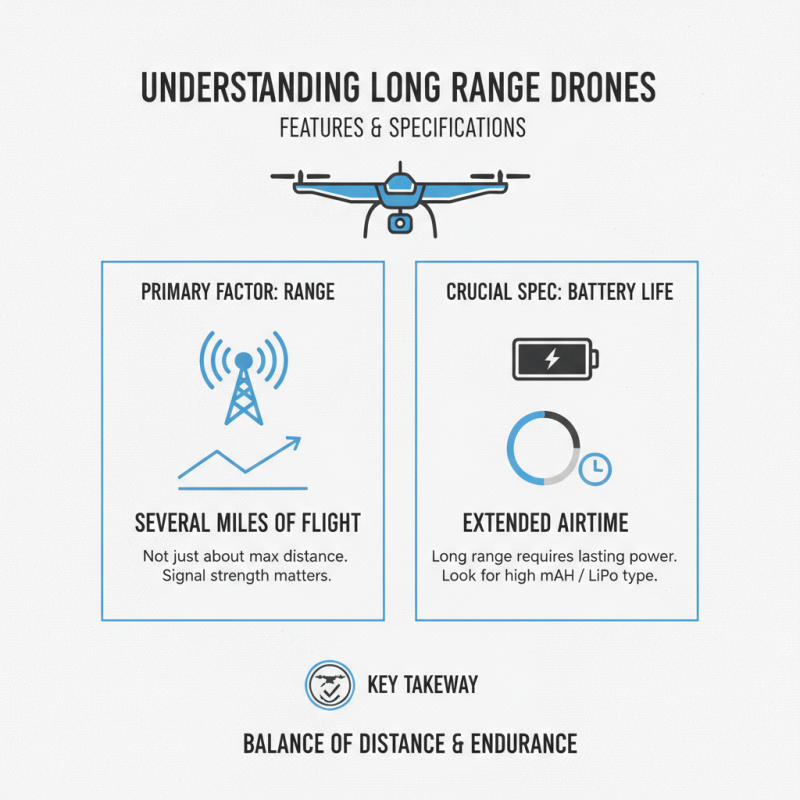
When selecting a long-range drone, it's essential to understand various features and specifications. Range is a primary factor. Many long-range drones can fly several miles. However, it's not just about distance. Battery life influences how long a drone can stay airborne. A model might claim a long range but fall short if the battery drains quickly.
Another important specification is camera quality. A drone equipped with a high-resolution camera can capture stunning images from afar. Check for features like stabilization and zoom capability too. These aspects can enhance your aerial photography experience. Additionally, consider the drone's weight. Heavier drones may withstand wind better but can be harder to transport.
Signal strength is crucial for long-range connectivity. Look for drones with advanced communication systems. They often have features that help maintain stable connections. Yet, even the best technology can falter in certain environments. In locations with heavy interference, performance might vary. Be prepared for challenges, and plan your flights accordingly.
Assessing Flight Time and Distance for Your Requirements
When selecting a long-range drone, assessing flight time and distance is crucial. The average consumer drone offers around 20 to 30 minutes of flight time. According to recent industry reports, professional drones can achieve 60 minutes or more. Longer flight times allow users to cover larger areas without interruptions.
Choosing a drone with a high range is just as important. Many drones can reach distances of 8 to 10 kilometers. Advanced models exceed this, with some capable of flying 20 kilometers or more. These capabilities are vital for applications like surveying and mapping. However, achieving claimed distances often depends on environmental factors like obstacles, weather, and battery health.
Tips:
Check for real-world test results on flight times. Some models may not deliver as promised. Always consider your specific needs. If you need quick maneuvers, a lighter drone may suit you better.
Additionally, keep in mind that the battery's lifespan can diminish over time. Regular maintenance is essential to ensure optimal performance. A well-maintained drone with a solid battery can make a significant difference in your flying experience. Always stay updated on technological advancements; they can vastly enhance your options.
Evaluating Camera Quality and Payload Capacity
When selecting a long-range drone,
camera quality and payload capacity
play pivotal roles. A high-quality camera is essential for capturing clear,
detailed images. An ideal resolution is
4K, but factors like sensor size and lens quality matter too.
Larger sensors often perform better in low light. Consider the lens options;
wide-angle lenses can capture more area, while zoom capabilities are crucial for
distant subjects. The perfect balance between quality and versatility is vital for professional use.
Payload capacity is another critical consideration.
It affects what additional gear your drone can carry. This could include filters,
additional batteries, or thermal sensors. Depending on your requirements, a drone
with a higher payload capacity offers greater flexibility. Evaluating
your specific needs is crucial. Not all tasks require carrying extra equipment. For
some, a lightweight configuration may be more effective. Reflect on the types of
projects you undertake. The right balance of camera quality and payload capacity
is unique for each user. Be aware of your priorities
and adjust your selection accordingly.
Comparing Navigation and Control Technologies in Drones
When selecting a long-range drone, understanding navigation and control technologies is crucial. Drones utilize various systems to ensure precise movement. GPS-based systems are common, providing location tracking and basic navigation. However, they can struggle in areas with poor satellite visibility. Advanced options, like visual odometry and inertial measurement units (IMUs), enhance positioning accuracy, yet they often increase system complexity.
According to a recent industry report, drones equipped with dual navigation systems achieve 30% better accuracy in challenging environments. This boosts reliability for operators. A reliable communication link is essential. Users should consider drones with multiple signal options to prevent loss of control.
Tip: Assess flight time and range specifications wisely. Ensure the drone fits your specific use cases. Compare battery life with mission requirements.
Drones with state-of-the-art control technologies, such as obstacle avoidance, improve safety. But these features may come at a higher cost. Some operators find that advanced systems often require extensive training. This can be a barrier. It’s vital to weigh the benefits against potential learning curves. Select a drone that seamlessly aligns with your operational needs.
Budget Considerations: Finding Value in Long Range Drones
When considering the best long-range drones, budget is often a major factor. A report from the Consumer Technology Association reveals that consumer spending on drones is expected to reach $4.5 billion by 2025. This projection highlights the growing demand for quality drones that fit various price points. Identifying the balance between features and cost is essential in this evolving marketplace.
Buyers must evaluate their intended use against costs. Some drones offer impressive features but come with a hefty price tag. For personal use or light commercial tasks, models priced between $500 and $2,000 can deliver substantial value. However, advanced options for professional use can exceed $5,000. It's crucial to assess whether expensive features, like enhanced cameras or extended flight times, align with your specific needs.
Additionally, potential buyers should examine warranties and customer support when pricing drones. Investment in a more expensive drone might yield long-term benefits, such as longer lifespan and better reliability. However, many users overlook maintenance costs, which can accumulate over time. Reflecting on these aspects can lead to more informed decisions and better enjoyment of your drone experience.
2026 How to Choose the Best Long Range Drone for Your Needs? - Budget Considerations: Finding Value in Long Range Drones
| Model |
Range (miles) |
Flight Time (minutes) |
Camera Quality (MP) |
Price ($) |
| Drone A |
10 |
30 |
20 |
300 |
| Drone B |
12 |
25 |
12 |
400 |
| Drone C |
15 |
35 |
24 |
600 |
| Drone D |
8 |
20 |
10 |
250 |
| Drone E |
20 |
40 |
30 |
900 |