How to Choose the Right Unmanned Aircraft for Your Needs?
Choosing the right unmanned aircraft can be a daunting task. With various models and features available, understanding your needs is essential. Unmanned aircraft vary greatly in size, capability, and cost. From high-end commercial drones to simpler models, each serves different purposes.
Consider your intended use. Will you use the unmanned aircraft for aerial photography, surveying, or recreational flying? Your needs dictate features such as camera quality and battery life. For some, ease of use is paramount. For others, advanced technology offers more appeal.
Reflect on your budget. Sometimes, the most expensive option isn’t the best fit. Assessing value can be tricky. Ask yourself if you really need high-tech features. Finding the right unmanned aircraft often involves compromises. Balancing desire and necessity is key to a fulfilling choice.
Understanding Your Specific Needs for Unmanned Aircraft
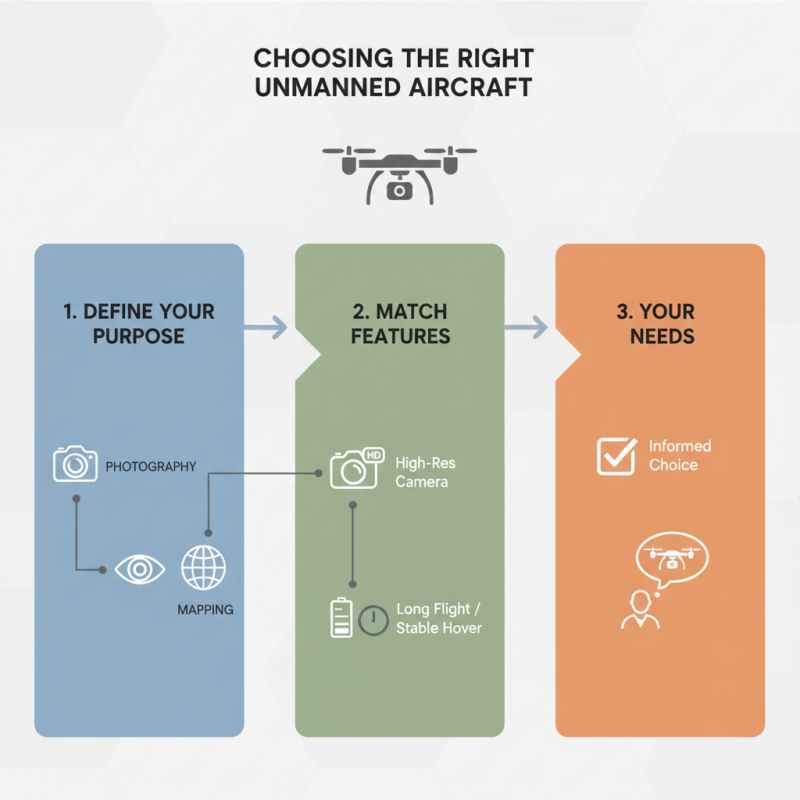
Choosing the right unmanned aircraft involves understanding your specific needs. Start by defining your purpose. Are you using it for photography, surveillance, or mapping? Each purpose requires different features. For example, aerial photography drones need high-resolution cameras. On the other hand, surveillance models benefit from long flight times and stable hovering.
Consider your operating environment. Are you flying in open fields or urban areas? This matters because certain drones handle obstacles better than others. It’s essential to think about battery life too. A model with a short flight time can be limiting. You might find yourself frequently recharging, which can be frustrating. Reflect on your typical flight duration and plan accordingly.
Budget constraints are another crucial factor. Drones can vary widely in price. Spending more doesn’t always mean you get what you need. Often, mid-range options perform adequately for various tasks. However, it’s crucial to research and read reviews. Sometimes, the features you think are necessary may not be. Understanding your specific requirements can save time and money in the long run.
Exploring Different Types of Unmanned Aircraft Available
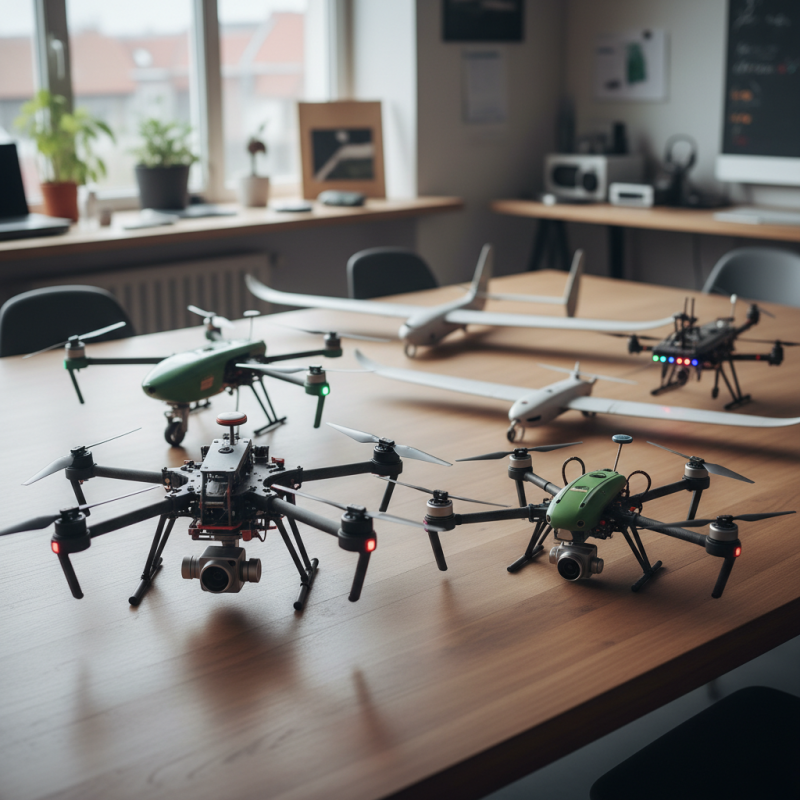
When considering unmanned aircraft, it’s crucial to understand the different types available. Drones can be classified into several categories, including fixed-wing, multirotor, and single-rotor designs. Each type serves unique purposes, from agriculture to surveillance. According to a recent industry report, the global commercial drone market is projected to grow by over 20% annually through 2027.
Fixed-wing drones are efficient for long-distance flights. They cover large areas quickly. Farmers often use them for crop monitoring. However, they need runways and are more complex to operate. In contrast, multirotor drones are easier to pilot and can hover in place. They excel in aerial photography and inspections. A survey revealed that about 45% of drone users prefer multirotor models for their versatility.
Another option is single-rotor drones. These can carry heavier payloads but are often more difficult to control. Users may face challenges with flight stability. This reflects a broader issue in the industry: the need for stringent training and certifications. The choice of drone depends heavily on intended use. Understanding the pros and cons of each type is essential for effective decision-making.
How to Choose the Right Unmanned Aircraft for Your Needs? - Exploring Different Types of Unmanned Aircraft Available
| Type of Unmanned Aircraft |
Best For |
Flight Time |
Payload Capacity |
Control Method |
| Quadcopter |
Aerial Photography, Recreational Use |
20-30 minutes |
0.5-2 kg |
Remote Control / Autonomous |
| Fixed-Wing |
Mapping, Surveying |
50-90 minutes |
5-25 kg |
Autonomous / Ground Control Station |
| Helicopter |
Search and Rescue, Aerial Inspections |
30-45 minutes |
1-10 kg |
Remote Control / Autonomous |
| Hybrid VTOL |
Long Range, Versatile Applications |
40-120 minutes |
2-15 kg |
Autonomous / Remote Control |
| Racing Drone |
Competitive Racing, Fun |
6-10 minutes |
0.2-1 kg |
Remote Control |
Evaluating Key Specifications and Features to Consider
Choosing the right unmanned aircraft requires careful consideration of various specifications. Weight, endurance, and payload capacity are crucial. According to industry reports, drones under 5 kilograms are popular for personal use. They are easy to carry and provide decent flight times. Yet, for commercial purposes, heavier drones are often needed.
Camera quality is another key factor. High-resolution cameras have become standard. Reports suggest that drones with 4K video capability are favored in real estate and cinematography. However, the cost of high-quality cameras can be prohibitive. It’s essential to balance quality with budget constraints. Sometimes, cheaper drones do not meet the necessary standards for professional work.
Battery life remains a significant concern. Many drones offer around 20 to 30 minutes of flight time. This may not be sufficient for extensive mapping or surveying tasks. Some users find themselves waiting for batteries to recharge. Ultimately, understanding your specific needs is vital. You may end up with a drone that doesn’t completely satisfy your requirements. Such a situation can lead to frustration. Therefore, weighing specifications against expected use cases is essential.
Assessing Budget and Cost-effectiveness for Your Selection
When selecting an unmanned aircraft, budget is crucial. It's essential to evaluate all costs involved. This includes initial purchase price, maintenance fees, and potential repair costs. Low-cost options might have hidden charges. They can also lack crucial features that aim for efficiency. This is where a careful balance is necessary.
Consider the project requirements. A heavy-duty drone might seem attractive, but it can be overkill for simple tasks. Analyze the specific needs. Do you require long flight times or high resolution for images? Sometimes, scaling down can save you money. Just because a model is popular doesn’t mean it’s the right fit. Balance features with practicality.
Lastly, it’s vital to reflect on your limitations. Will you have resources for ongoing training? Consider the learning curve for more advanced models. Sometimes, investing in simpler technology can yield better long-term results. Costs aren’t the only numbers that matter. Your comfort and proficiency will significantly influence your success.
Cost-Effectiveness of Different Unmanned Aircraft
Researching Manufacturers and Customer Reviews for Reliability
When selecting an unmanned aircraft, researching manufacturers is crucial. A reputable manufacturer can greatly influence the reliability of the aircraft. Look for companies with a strong track record and extensive experience. Check their history and any awards they have received. This can provide insight into their commitment to quality.
Customer reviews are equally important. They offer real-life experiences and can highlight potential issues. Pay attention to both positive and negative feedback. Average ratings may not tell the whole story. One engineer might rave about a drone. Meanwhile, another user might struggle with the same model. These contrasting viewpoints can reveal hidden strengths or weaknesses.
Consider asking for recommendations from trusted sources. Peer opinions can often lead you to reliable choices. However, keep in mind that every user's needs differ. What works for someone else might not suit you. It’s vital to reflect on your specific requirements before making a decision. The process might seem overwhelming but thorough research pays off.