2026 How to Choose the Best UAV Drone for Your Needs?
Choosing the right UAV drone can be overwhelming. With various models and features available, making a decision is challenging. Each person has unique requirements. Some need it for recreational use, while others might need it for professional tasks. The right UAV drone must meet your specific needs.
Consider the purpose of your UAV drone. Are you using it for photography, surveying, or racing? Each application demands different features. For example, a camera drone should have high-resolution capabilities. Battery life is another crucial factor. A drone that cannot fly long enough is of little use.
Price is also a significant consideration. A higher price may indicate better quality. However, it is not always the case. Sometimes, a less expensive drone may suit your needs just fine. Reflect on your goals and budget. Finding the right balance is essential for a satisfying experience with your UAV drone.
Understanding the Different Types of UAV Drones Available Today
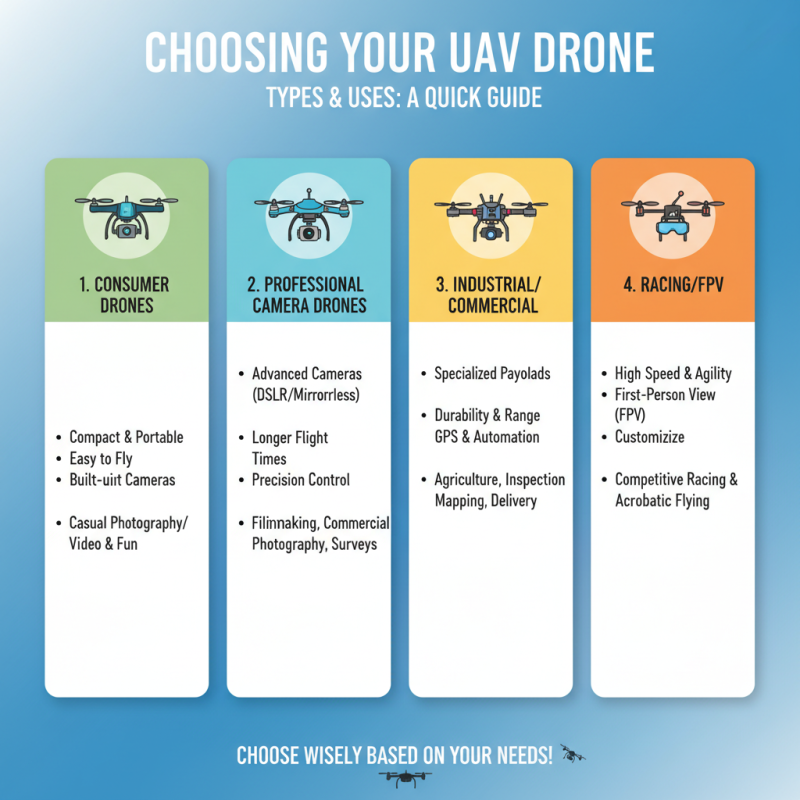
Choosing the right UAV drone can be overwhelming. There are different types designed for various purposes. Understanding these types is key to making the best choice for your needs.
The most common type is the quadcopter. It's stable and easy to control. This makes it ideal for beginners. If you want to capture videos or photos, a quadcopter is a good option. It can hover in one spot and provide smooth footage.
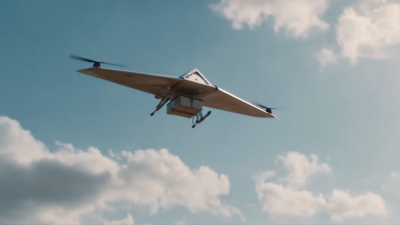
Another option is the fixed-wing drone. This type resembles a small airplane. It can cover large areas. However, its operation can be more complex. Fixed-wing drones are great for surveying land or monitoring crops. They have longer flight times, which can be beneficial.
Tips: Consider your skill level before purchasing. If you're a beginner, don’t rush into advanced models. Also, think about how you plan to use the drone. If it's for fun, a toy drone may suffice. For professional tasks, invest more in features.
Remember, features come at a cost. Drones with advanced technology are pricier. Weigh your needs against your budget. It’s okay if you aren't sure at first. Do your research, and don’t hesitate to seek help from experts or experienced users.
Key Factors to Consider When Selecting a UAV Drone
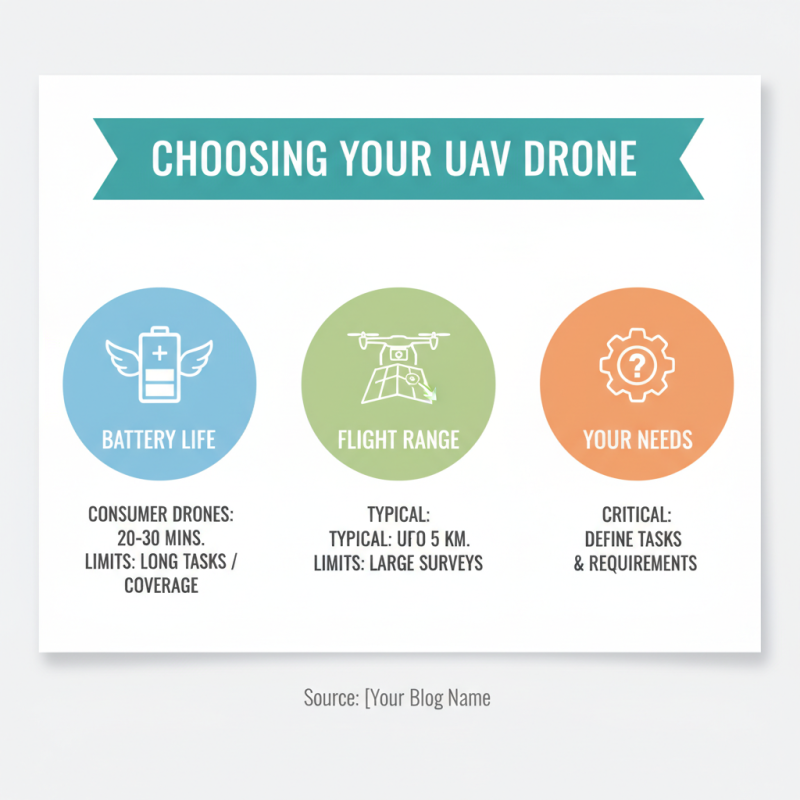
When selecting a UAV drone, understanding your specific needs is critical. Consider battery life, which often ranges from 20 to 30 minutes for consumer drones. This duration might limit its effectiveness for tasks requiring longer flight times or extensive coverage. Flight range is another important factor. Many drones can cover distances up to 5 kilometers. However, this is inadequate for large-scale surveying projects.
Payload capacity should also be assessed. Drones can typically carry between 0.5 kg to 2 kg. Choosing a drone that can handle your required equipment is essential. A drone with insufficient capacity may not support necessary cameras or sensors. Additionally, consider ease of use. Even drones with advanced features can be challenging for beginners.
The market's continuous evolution means you may find a better option later. Keeping up with trends and technology is vital. Recent reports suggest that the UAV market is expected to grow by 15% annually, which highlights the potential for new innovations that could meet your needs more effectively. Always reflect on whether your choice aligns with future requirements as well.
Assessing Your Specific Needs and Use Cases for a Drone
When choosing a UAV drone, understanding your specific needs is crucial. Consider what tasks you want to accomplish. Are you looking to capture stunning aerial photos? Or do you need a drone for surveying large areas? Each use case may require different features and capabilities. Think about flight time, camera quality, and range. Note that some drones excel in photography but struggle with endurance.
Assessing your environment is also important. Indoor flying needs smaller drones with stability. Outdoor missions may require durable drones that can handle wind. Reflect on how often you'll use the drone. If it's occasional, you might prefer a more affordable option. Frequent use could justify investing in advanced technology. Remember that learning to fly a drone takes time and patience. Start with simpler models to build your skills.
Lastly, think about how you might feel after your purchase. Will the drone fulfill your expectations? Be prepared for trial and error. Sometimes, the learning curve can be steep. Choosing the best drone involves understanding your goals and being open to adapting as you learn.
Budget Considerations: How Much Should You Spend on a UAV Drone?
When choosing a UAV drone, budget plays a crucial role. Prices vary widely, from a few hundred to several thousand dollars. According to a market report from Research and Markets, the global consumer drone market is projected to reach $6 billion by 2025, highlighting the increasing accessibility of drone technology.
You might start with a budget of $300 to $500 for a basic quadcopter. This range covers essential features like HD cameras and decent flight time. However, if your needs are more specialized, such as aerial photography or surveying, consider budgeting $1,000 to $2,000. Drones in this category offer advanced functionality, including more robust sensors and longer flight durations.
Keep in mind that extra costs can quickly add up. Accessories like spare batteries, storage cards, and carrying cases should be factored in. Additionally, maintenance fees can be overlooked. Neglecting to budget for repairs could lead to larger expenses later on. Understand your specific needs and how they align with your budget. This reflection will help avoid overspending on features you may never use.
2026 UAV Drone Budget Considerations
Evaluating Additional Features and Technologies in UAV Drones
When selecting a UAV drone, additional features can significantly impact its performance. Camera quality is a key factor. A high-resolution camera enhances aerial photography, providing crisp images and detailed videos. Look for drones that offer gimbal stabilization. This feature reduces shaky footage. Flight time is another essential aspect. Many drones can fly for around 20 to 30 minutes, but some models offer extended durations. You may find this useful for longer projects.
Autonomous flight capabilities are becoming common. Drones with GPS assist in precise navigation. They can follow specific routes with minimal input. This reduces potential errors during flight. Think about obstacle avoidance systems, too. These technologies help prevent collisions. However, they’re not infallible. Users must stay vigilant when flying.
Battery life is crucial yet often underrated. Some drones boast long flight times but may take hours to recharge. This can hinder your planning. Consider the convenience of removable batteries. This allows for quick swaps during extended use. Finally, take time to assess how user-friendly the controls are. A steep learning curve can lead to frustration. It’s essential to find a balance between tech features and ease of use.