What Is the Best Long Range Drone With Camera in 2026?
Choosing the best Long Range Drone With Camera in 2026 means looking beyond the largest number on the box. A quoted transmission distance is not the same as dependable footage from a distant hillside. Wind, trees, signal interference, battery reserve, and local operating rules all change what a drone can safely and reliably do. Small details matter: a clear live view, predictable return-to-home behavior, and enough battery to land without rushing.
The market is expanding, but that does not make every model a sound purchase. PwC’s Clarity from above report estimated $127.3 billion in potential business-services value across industries from drone applications. That figure is an estimate, not proof that any particular camera drone delivers professional results. For perspective on operational discipline, former FAA Administrator Steve Dickson stated, “Safety is the FAA’s top priority.” A useful reminder.
This guide compares real buying factors: tested flight endurance, camera quality, transmission reliability, obstacle sensing, repair support, and total cost. Manufacturer range claims deserve skepticism. They are usually measured in controlled conditions, not beside a wet forest trail with gusts pushing the aircraft sideways. Impressive numbers, sometimes. Useful in practice? Not always. We will distinguish advertised specifications from independent test findings where available, and flag uncertainty rather than disguise it. The best choice depends on your route, skill, and footage needs—not just how far the drone claims it can fly.
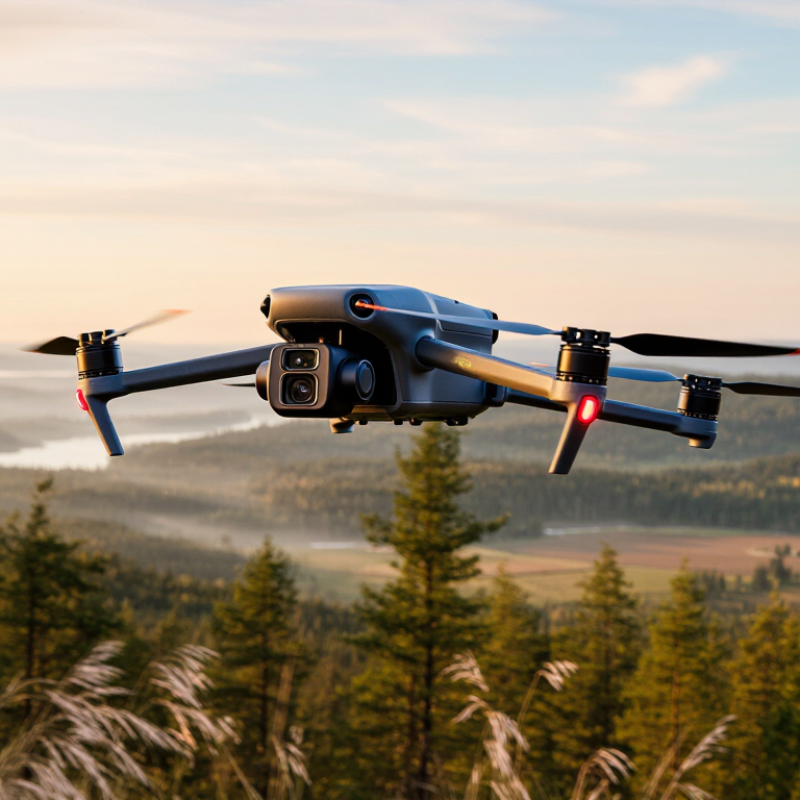
What Qualifies as a Long-Range Camera Drone in 2026?
In 2026, “long range” should describe dependable performance, not the biggest distance printed in a product sheet.
There is no universal cutoff: advertised range may be measured in open, interference-free conditions unlike a real flight. Conditions matter. A camera drone qualifies when its control link, live video, and telemetry stay clear along the intended route, with enough battery reserve to return safely.
Look beyond the headline number. Check whether the video remains detailed enough to frame a subject, signal warnings appear promptly, and the aircraft handles modest wind without excessive drift. Battery capacity alone tells little; temperature, speed, payload, and repeated climbs all affect endurance.
Keep margin.
Reaching a distant point is not useful if the drone cannot return reliably.
Practical testing means using a measured route, conservative conditions, and clear points for turning back.
Record distance, remaining battery, signal quality, and image stability instead of relying on one successful flight. Results still vary: trees, buildings, terrain, and radio congestion can change performance quickly. That is easy to underestimate. Choose a drone suited to lawful operating limits and your actual camera work, not just its theoretical maximum.
Key Features to Compare in Long-Range Camera Drones
A long-range camera drone is not defined by distance alone. Compare the control link in open conditions with the battery’s usable flight time. They are different limits. A strong signal cannot help if the aircraft must turn back early. Wind, hills, and buildings can also reduce real-world range. Check whether the stated figures come from controlled tests, and leave a safe battery reserve for the return.
Camera quality deserves close attention. Look beyond headline resolution: sensor size, lens field of view, stabilization, and performance in low light all shape the footage. A three-axis gimbal can steady a slow pan, while a small sensor may struggle at dusk. Check the camera’s available frame rates and whether it records enough detail for cropping. Obstacle sensing, reliable positioning, and a clear return-to-home function matter too. They add confidence, though they do not replace careful piloting.
Tips: Compare total system weight, spare-battery cost, and setup time, not just flight specs. Test video transmission in a clear, familiar area before relying on it farther away. Keep expectations realistic. A published range is not a promise for every landscape or weather condition.
What Is the Best Long-Range Camera Drone in 2026?
Compare common video frame sizes by pixel count. Values are calculated from each listed raster; higher resolution gives more image detail but does not guarantee better footage or longer transmission range.
When comparing long-range camera drones, consider transmission reliability, flight time, sensor performance, stabilization, and local operating rules alongside camera resolution.
How Leading 2026 Drone Models Differ
What Is the Best Long Range Drone With Camera in 2026?
How Leading 2026 Drone Models Differ
Long-range camera drones differ less by advertised distance than by how steadily they capture usable footage. Compare sensor size, lens options, stabilization, and return-to-home reliability. A larger sensor can retain more detail in dusk shadows, while a stabilized camera keeps rooflines level in gusty air. Numbers need context. Maximum transmission distance is usually measured under controlled conditions, not behind trees or buildings.
Flight time, radio resilience, and image quality involve trade-offs. A lightweight model may launch quickly, but wind can shorten its practical working time. A heavier aircraft may carry a larger sensor, yet need more room for safe takeoff and landing. The FAA’s 2024 Aerospace Forecast estimated about 855,000 commercial small unmanned aircraft in the United States in 2023. That figure describes fleet scale, not camera-drone range; it does underline why dependable operations matter. Compare tested flight time with payload and wind conditions, not just manufacturer claims.
That matters.
For surveying, inspect repeatable image overlap and geotagging. For distant landscape work, prioritize clean footage at the edge of the radio link and a clear battery reserve. Link indicators can look reassuring until terrain blocks the signal. Check the manual’s stated test conditions, then keep flights within applicable operating rules and safe, observable limits.
A perfect specification sheet can still disappoint.
Which Drone Best Fits Each Type of User?
What Is the Best Long Range Drone With Camera in 2026?
Which Drone Best Fits Each Type of User?
For travelers, the best fit is usually a foldable drone with a capable camera and batteries that are easy to pack. A compact aircraft is less tiring to carry on a long trail. Landscape creators may prefer a larger sensor and adjustable camera angle, especially for dawn scenes. For mapping or routine site checks, prioritize stable hovering, clear live video, and predictable controls over dramatic zoom. Long range sounds impressive, but usable distance depends on signal conditions, weather, battery reserve, and maintaining a safe view. Numbers on a box are not a promise.
Tips: Check flight time in realistic conditions, not just the best-case figure. Leave battery for the return. Keep it simple.
Before choosing, decide what you actually film. A wildlife observer may value quiet operation and smooth control, while a beginner may benefit from obstacle sensing and an uncluttered app. Those features can add weight or cost, though, and they cannot replace careful piloting. I would compare sample footage in ordinary light, not only polished promotional clips. Also check spare-part availability and local flight requirements. Small details matter. A drone that feels manageable in wind and packs without fuss may serve better than one with a bigger range claim. There is no perfect pick; range figures are easy to overvalue.