What are the Benefits of Using a UAV Unmanned Aerial Vehicle?
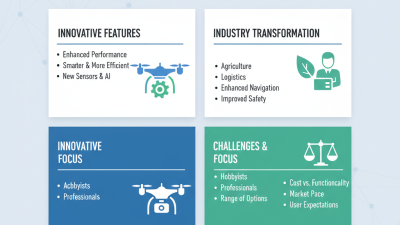
The use of UAV Unmanned Aerial Vehicles has rapidly grown in recent years. Businesses and individuals appreciate the efficiency they offer. UAVs provide unique perspectives and insights. With the ability to capture high-resolution images, these aerial vehicles benefit various fields like agriculture, construction, and surveillance.
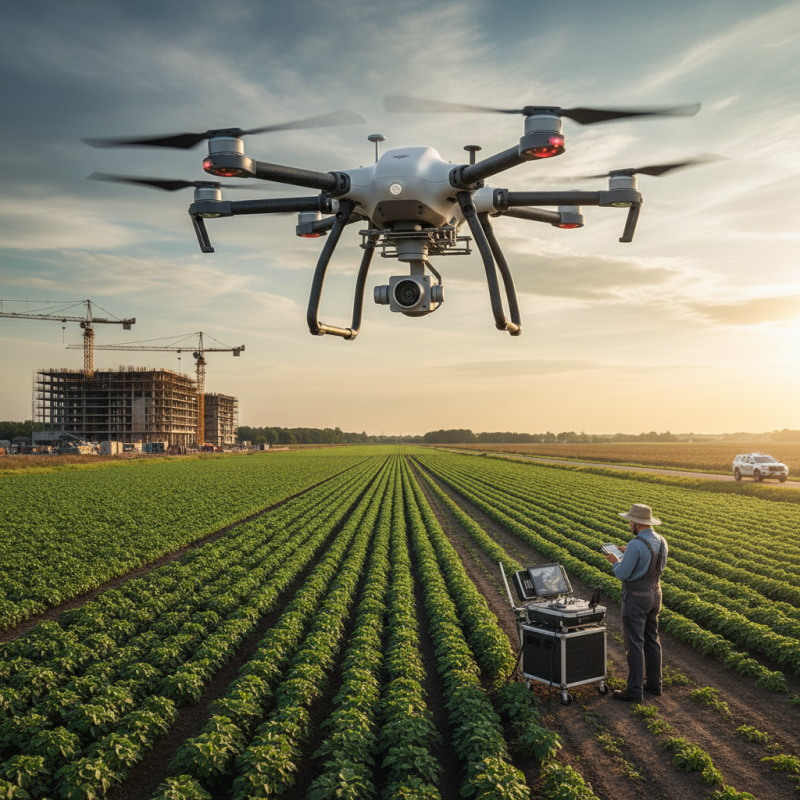
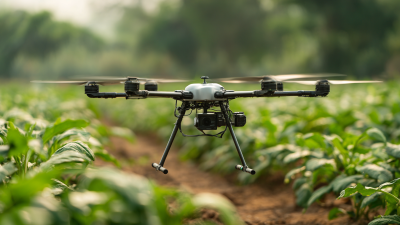
For instance, in agriculture, UAVs monitor crop health from above. They can cover vast areas quickly, providing data-driven insights for farmers. However, this technology isn't without its challenges. Issues like battery life and data management can limit effectiveness.
Despite the drawbacks, the advantages of UAVs are undeniable. They offer innovative solutions for traditional problems. As industries continue to adopt UAV Unmanned Aerial Vehicles, the need for careful implementation becomes crucial. Balancing benefits with ethical considerations is essential for future advancements.
Benefits of Using UAVs in Agriculture: Yield Improvement and Cost Savings
UAVs have transformed agriculture by enhancing crop management. Farmers can now monitor vast fields from above. Drones capture high-resolution images. This allows for precise assessment of crop health. Issues like pests or diseases can be detected early. As a result, interventions can be targeted and effective.
Cost savings are significant. Using UAVs reduces the need for expensive manpower. They can cover large areas in a short time. This speeds up data collection for decision-making. Farmers notice improvements in yield with better resource management. The precise application of fertilizers and pesticides is one example.
Tips: Keep an eye on drone regulations in your area. This varies by location. Ensure your team is trained properly. Understanding how to analyze data is crucial. Regular maintenance of the UAV is also vital for optimal performance. It can lead to unexpected challenges if neglected.
Benefits of Using UAVs in Agriculture: Yield Improvement and Cost Savings
UAVs in Infrastructure Inspection: Enhancing Efficiency and Safety Standards
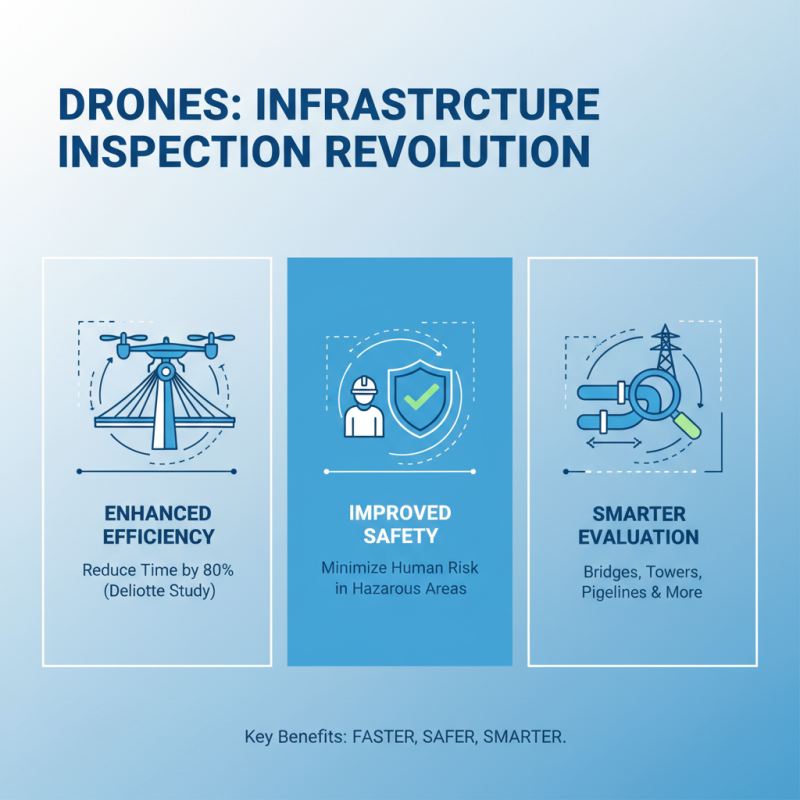
Drones are revolutionizing infrastructure inspection. Their use enhances efficiency and safety evaluation in various sectors. According to a recent study by Deloitte, UAVs can reduce inspection times by up to 80%. This efficiency is crucial for regular inspections of bridges, towers, and pipelines.
Using UAVs minimizes risks for human inspectors. Workers previously faced dangerous conditions, often at heights or in remote locations. Now, drones can access difficult-to-reach areas, capturing high-resolution images. This capability leads to more accurate assessments. A report from the Association for Unmanned Vehicle Systems International (AUVSI) indicates that integrating drones can reduce accident rates by 25%.
Despite these advantages, some challenges remain. Data accuracy must be ensured, as poor images can mislead assessments. Training is necessary for operators to interpret the data correctly. Additionally, regulatory hurdles still exist in some regions, limiting widespread adoption. As the technology evolves, the potential for improved infrastructure inspection remains vast.
Environmental Monitoring with UAVs: Real-Time Data and Conservation Efforts
UAVs, or unmanned aerial vehicles, are transforming environmental monitoring. These flying machines collect real-time data that aids in conservation efforts. They can cover vast areas quickly, providing insights into ecosystems that would be hard to access otherwise. For instance, monitoring wildlife populations can help track their movements and health.
When using UAVs for environmental purposes, consider these tips: Choose the right altitude for your flights. Higher altitudes give broader views, while lower ones provide detailed images. Ensure your UAV is equipped with the necessary sensors to gather relevant data. These can include cameras, infrared sensors, or thermal imaging.
Real-time data from UAVs helps in making quick decisions. However, there are challenges. Data interpretation can be complex. Not every flight will produce useful results. Sometimes, weather conditions may interfere. Learning from these experiences is key to improving future missions. By paying attention to these factors, UAVs can make a significant impact on conservation.
Disaster Response Capabilities of UAVs: Swift Aid and Damage Assessment
UAVs are transforming disaster response strategies. These unmanned aerial vehicles can reach remote areas quickly. When disasters strike, every second counts. UAVs can deliver aid to unreachable locations. They provide a fast and efficient way to assess damage.
Real-time aerial views help responders understand the situation better. High-resolution cameras can capture detailed images. This information guides rescue teams where they are needed most. However, limitations exist. Sometimes, UAVs may struggle in urban environments. Buildings can obstruct signals and reduce effectiveness.
Training for operators is crucial. A lack of knowledge can lead to missed opportunities. Local expertise is vital for effective use. UAVs have great potential, but they require thoughtful integration into emergency plans. Embracing both their strengths and challenges is essential for improvement.
What are the Benefits of Using a UAV Unmanned Aerial Vehicle? - Disaster Response Capabilities of UAVs: Swift Aid and Damage Assessment
| Feature |
Description |
Benefit |
| Aerial Imaging |
Capturing high-resolution images from the air. |
Provides real-time visual data for quick assessment. |
| Thermal Imaging |
Detecting heat signatures and identifying hotspots. |
Aids in locating survivors and assessing fire damage. |
| Mapping and Modeling |
Creating 2D and 3D models of disaster areas. |
Facilitates planning for rescue and recovery operations. |
| Autonomous Flight |
Programs for predefined flight paths and missions. |
Enables efficient data collection without the need for constant operator control. |
| Rapid Deployment |
Quick setup and flight readiness. |
Allows immediate response in emergency situations. |
| Cost-Effectiveness |
Lower operational costs compared to traditional aerial methods. |
Saves resources and time in disaster response efforts. |
UAV Applications in Delivery Services: Revolutionizing Logistics and Supply Chains
UAVs are changing the delivery landscape. They can cover distances quickly and efficiently. This is especially valuable in remote areas. Drones can navigate around obstacles and avoid traffic. They save time and reduce costs in logistics.
Using UAVs for delivery also poses challenges. Weather can disrupt flights. Battery life limits distance and payload. While drones are great for small packages, larger items may be problematic. Not all locations have the infrastructure for drone landings.
Safety is a key concern as well. Collisions can occur, leading to accidents. Public acceptance is crucial. Many people are wary of UAVs flying over their homes. It requires careful planning and community engagement to address these issues. Balancing innovation with safety is essential for the future of drone deliveries.